Suica, Japan's First IC Transit Card(tokyodev.com) |
Suica, Japan's First IC Transit Card(tokyodev.com) |
I was floored when I found out you could pay for stuff with my "Japanese MetroCard." It's quite a wonderful system.
What are y'all comparing it with?
I’ve tried to find videos online but they all seem… normal?
But it's really quite fast compared to more general balance card services like NFC/tap to pay, etc.
Imagine if you could pay with the Oyster card everywhere from Tesco to Greggs to National Rail to Uber
Actually you can find some small family shops, restaurants etc where they don't accept credit cards but Suica only
The regular Suica app is separate and is not English-friendly (this may be worth it for you only if you’re staying long term, ok with the language barrier, and want a card that doesn’t expire).
Credit to the Suica folk and Apple folk for making it seamless.
As for the speed.. idk I think it's about as quick as the Oyster card. Phone payments have a bunch of extra latency on TfL too.
I'm getting off-topic here, but I really appreciate it when people get this date right.
This is the part that I'd be interested in reading more about. I'd known there must be some data on the card itself (since I can still use smartphone apps to read my cards now that I'm back in the US), but assumed there must have been some server connection too since storing anything authoritative on the card would invite tampering, and wondered why they would've bothered to store a log of recent trips on the card itself in addition to the hypothetical servers. It does make sense for latency reasons that they'd design it for the card itself to be authoritative, but I wonder how they do prevent tampering.
This is not true. It also stores some history on where you have last entered so it can do things like transfers or block you from exiting an area that you never entered.
Was a bit shocked to find that I can just read my suica using my European Pixel. I had expected that part to be encrypted somehow.
Brillant!
But there are two somewhat significant issues with the radio layer in this application: the geometry of tag antenna is somewhat critical (making it into a band would be problematic) and the back scatter is attenuated by salt water blobs (ie. people) almost perfectly.
Brillant!
AT&T showed this in television commercials back in the 1980's.
"Can you go through a toll booth without stopping? You will. And the company that will bring it to you is AT&T."
Lots of those things happened (maybe not faxing from the beach), but AT&T didn't bring us very many of them.
^ that was the official explanation for a long time, but they've reportedly transitioned to more credit-card like online system with no station-level servers, and also raised fees, which was negatively received by many rail operators aside JR East itself(which owns the system). There had been few rail companies experimenting with NFC credit card rides, though I'm personally suspecting it's more of bargaining power development.open threat than those lines seriously considering a switch.
The chips in the cards are secure enough that physical tampering is extremely difficult and software tampering is difficult enough with security by obscurity + encryption - the catch is that, it turns out, early Suica cards used DES(not even 3DES it seems), and they just didn't tell anybody until those went out of circulation. Plus, the prepaid limit of 20k yen(local equivalent of $200) limits abuse potential of the system; it's not worth trying to commit blatant frauds on the train-and-sandwiches card.
I don't think a limit on the value stored on the card limits the potential of fraud. I'm not imagining someone would load tens of thousands of yen onto their card. I'm more imagining someone setting the card to have enough money to get through the gate, every time they want to use the train. I'd agree fare is cheap enough that it's probably not worth someone's time to figure that out, but it would add up over time if someone did it (and especially if the method for doing so got passed around).
I also understand that there's two-way communication with one-time/expiring keys that would prevent a simple replay attack from working. Really just interested in understanding the entire mechanism in more detail! It gets handwaved as just "encryption" in a lot of discussions, probably due to a combination of intentional obscurity (like you mentioned) and it just not being super interesting or relevant to most contexts.
(Also, good point that the servers would still allow significant deviations to be caught and the card rejected/flagged in the system-- I've also seen that concept mentioned elsewhere after trying to research it a bit more.)
They'd download their transaction logs out of the buses every night and do a reconciliation. If they found a card where the value went up or had impossible travel times, they'd look at the travel routes/dates and wait around on the "hackers" commute route with a police officer until they showed up. Very manual.
People not in Japan/Singapore/Korea/China should experience what a proper transit card done looks like.
It's also useful in that you can pre-order a Shinkansen ticket, for example, and link that purchase to your Suica card, which you then use for the Shinkansen gate. If there are other fees (which there may be) they're just deducted from the money the card holds, as usual. Makes everything very simple.
For me a physical card is easier than using a phone. A phone is so much larger so I would need to get it from a pocket somewhere, while the Suica card I can keep in my jeans pocket or some other easy place.
In Prague city transit does not have limiting gates. If you bought unlimited ticket, you just walk in bus/tram/metro and that is it. No touching, scanning, showing, nothing. Maybe once a month (or even rarer) you might encounter a patrolling controller who would ask you to show your ticket, but that's it.
Only Japan is on another level
Definitely better than the QR codes used by China.
When you remove the network and run locally, you’d expect it to be amazingly fast.
But it’s also effectively physical cash. And that has many downsides as well.
I was honestly so impressed by that, you mean I can just tap on? Don’t need to stand here outside the gates for 10 minutes entering my info into a frustrating app? Don’t need to buy a $10 card, only $5 of which I’ll ever use? Even with suica being pretty easy to set up on iPhone, this is definitely something Sydney’s got over Japan’s system.
I feel either the gate is making international round trip calls through the internet to some SaaS service. Our it's actually doing a face scan and lookup.
Took me roughly a minute to create one within Apple Wallet ahead of my trip, and that was it. Didn't need to install any apps or register on any websites, because creating a Suica card is natively supported in the wallet app.
Idk how the situation is like with Suica card on Android though, outside of the fact that unless the phone was purchased in Japan, it will typically lack the necessary hardware for it (which isn't a concern with iPhones, because all regional versions include it).
You just tap Buy Suica and insert two 1000 yen bills. The system keeps 500 yen as a deposit, which is refunded when you return the card, but it's also $3.50 for a little memorabilia.
If you absolutely don't want the keepsake, you can create a virtual card from Wallet on iPhone(7 or later). I believe an app is not needed through that path. Those can be loaded from your credit card, or at pink ticket vendors with the cavity for devices(IIRC the latter didn't work initially).
It used to be easy to get one from a 7-11, then it was hard for a bit, then it was easy again with digital wallets.
Maybe you can refill it with cash? Or did I have to buy it with cash? and when you leave everything expires.
I had to get 4 as I was traveling with kids who don't own phones and could get cheaper rates, took a few minutes, you waste a few yen but get to keep the souvenir.
It reminds me of that oft touted experiment where a light lit up within some number of milliseconds of a person hitting a button, and people perceive it as happening before they hit the button.
There's a big difference in antisocial behaviour and visible mental health issues between Tokyo and San Francisco.
"San Francisco’s BART found that systemwide crime fell 41 percent after new gates were installed. Even more impressively, across the ten stations with the most corrective maintenance needs, staff time spent on in-system maintenance fell 96 percent, which suggests that fare evaders also cause most unreported crime, like littering, vandalism, and graffiti."
https://www.city-journal.org/article/transit-crime-fare-gate...
In NY, sometime i have to double pay because the card that worked on bus doesn't work on subway...
Reading this article it makes sense why it feels too fast to be real, especially when using a powered phone. The things are already communicating as my hand is moving towards the reader. By the time it gets there, it's happened.
Stunningly good.
The only reason fast transit cards work is that the chips on them are under control of the transit agency, and designed in a way that makes it impossible for the card owner to hack in and modify the balance. If somebody finds a fundamental flaw in Suica, I suspect things will get pretty interesting indeed.
If you tried to implement Suica with cards where the card owner had full control, you would have to do this with asymmetric keys, cryptographic signatures, and a round trip to the server for every transaction.
Whitepaper: https://www.jreast.co.jp/e/press/2024/pdf/20241210.pdf
They're planning on moving beyond the ¥20,000 prepaid balance limit, they are adding QR code payments (think WeChat and Alipay), making Suica work across regions and support more touchless and cloud-based systems, and connecting it more with banking, shopping, loyalty, discounts, and local services.
So essentially they want to become your default payment platform which is a huge opportunity given how paper-money-driven Japan is.
Having the option to also pay with credit card would be much more convenient to tourists, when I visited Japan I've had difficulties finding the right place to get a SUICA card (being that my Android phone didn't have Felica chip, as most phones sold outside Japan), and on top of that you almost everywhere need to charge it with only cash. And you can charge it only by 500 or 1000 yen at the time (depending on the machine), and of course tickets always have not round prices like 110 yen. And you have 500 yen of deposit for a card that probably costs to them 10 yen to manufacturer, unless you get the red SUICA card that you can get only in some special machines at the airport but with that you don't get back the unused credit when you leave (you can spend it at vending machine tough).
So the speed saving of a couple of ms of not having to pay by tapping your normal credit card is completely vanished by wasting time to charge that card.
BTW even if they don't want to put credit card POS on every station (I get it, it's expensive and they need to pay fees if someone uses a card, compared to cash) they could make a system that uses regular NFC (would be 100ms slower, who cares) at least for tourists so they can use it with a regular NFC card in their phone wallet that they can charge with an app without requiring a technology that only works in phone sold in Japan?
iPhones have it worldwide, so a visitor to Japan can use Apple Pay to stand up a card and fund it.
Or you have a contortionist spirit in you, whatever works :)
Japan is, due to its history and culture, is very good at finding these kinds of nature inspired solutions to their somewhat hard problems in a very elegant way.
I really like them when they do that. This is why some of the Japanese wares look a bit unconventional but extremely delightful to use.
I live in Switzerland, and they don't use a tap in/tap out system at all. There are no barriers to enter the station, anywhere.
There are multiple ways to purchase a ticket, I usually use the app Fairtiq or the official SBB app, where I swipe right before boarding the train/tram/bus(it's a national system, so even works on the regional networks) and swipe left when I'm done with my travel.
It then calculates the best price for me. If I do multiple journeys, it will know what I should have gotten a 24 hour pass, and subsequent travel is free.
tap in/tap off sucks no matter how good the system is. It is fundamentally a wrong think.
I travel by public transport in many countries, I travel over the world for work, it is my preferred mode of transport. Switzerland has by far the best ideas. Luxembourg is great as well, totally free, but small.
That's surprising. IC cards are so universally and cheerfully accepted that I assumed they had no per-transaction costs. Compare the US, where merchants can be surly about card payments.
I love it when little everyday things bring a tiny bit of happiness and color into daily life. (for more info: https://www.japan-guide.com/e/e2359_003.html)
I believe the reason is mostly historical (it wasn't deemed necessary when most of the system was built, and the later attempt to introduce the gates later failed for a bunch of different reasons)
The challenge in the UK is getting tap-to-pay through bank cards onto all the little local bus operators.
Many cities have their own cards, that are used for transit only (so no vending machines etc., and no interoperability between cities), increasingly many places just let you use your credit card in place of the special transit card, some places (Germany, some parts of Scandinavia) don’t have ticket gates at all.
They now made the decision to completely retire the current RFID solution, because the chip vendor discontinued the lineup it relies on. Its replacement proprietary card is based on NFC tap-to-pay, so on top of terrible product compatibility during the transition period we're also getting a nice extra tap-in delay out of it.
It's depressing that some transport systems around the world delivered decades later couldn't match this (using a proprietary card not a credit card), looking at you Myki.
Anyway it was a great read! Glad to see somebody writing without (obvious) use of LLMs.
[edit] Looks like this finally became public recently https://www.techtimes.com/articles/321138/20260721/japan-con...
It is so convenient to use Express Transit Cards on iOS… I also just found out that there’s something similar for Presto cards in Toronto so I’m going to have to set that up too.
Want to buy a drink while waiting for your train? Just tap the same card. It’s magical and way faster than ApplePay or similar tech.
Sadly physical cards may only have a few years left, for the most part using tap-to-ride is superior. So I really have to get out there and grab them while I can.
https://www.jreast.co.jp/en/multi/welcomesuica/welcomesuica....
* I have no idea how a shortage of hardware would make it better to give out temporary, expiring cards than permanent cards, since I assume they use the same technology (and the temporary ones would cause more churn, if anything). But that was the story at the time.
Also IIRC, relationship between Sony and JRE had soured few years ago and the fab in Japan that manufactured Suica cards was shut down. The contract went to Panasonic, but looks like Panasonic then sold off the smartcard unit to Nuvoton, and likely some security/nationalistic issues around that was the cause of the card supply issue.
There are really subtle cues to tell the model number(smartcards have model numbers!) and manufacturer of cards, most simply in tiny dent created by the cavity to hold the chip. Sony ones were circular and current cards are racetrack shaped.
Now QR code payment seems to be taking off in Japan, but unfortunately you can't access it as a tourist.
Similarly, it could also be implemented via a rolling payment hold loop. Unattended petrol stations do something similar: you first insert the card to authorize a hold (say $200), then fill up the car, then finalize the transaction - at which point your $50 bill is actually deducted and the hold on the remaining $150 is released. Transit could do the same, with only the very first transaction being slow, and each terminal containing a list of pre-authorized cards.
Anyway I love my Suica. I got it a good decade or more ago, I have a few thousand yen on there, and it's always ready for me when I go back to Japan. Useful on the Metro, trains and in shops. Easy to top up at the plentiful, dedicated top up machines. I also loaded Shinkansen tickets on it last time and travelled "ticketless".
This is also put in use in many karaoke joints to save a list of your favorite songs/song history.
JFYI, over 50% of payments in Japan in 2026 are digital now. So not as high as other markets but certainly much less paper money than pre-pandemic.
Like....somehow they turned a sub 1ms operation into a 4 minute 32 second one. It boggles the mind
It's not really mentioned in the article, but Suntory and transit operators out in Hiroshima etc. are turning away from Felica simply because the licensing fee is too high for them. That's also why Samsung and Google don't enable it on non-Japanese phones. Sony and JR missed the part where they have to generous first to eliminate all competition before jacking up fees, and now they're getting eaten by QR payment and Visa.
I think you might be referring to QR de Kessai [2], which was introduced in 2023 and is targeted more at inbound international tourists who don’t want to download the app and may not have an E-Money card. Basically they aim to support to support the widest possible audience - at the cost of a slow/clumsy experience. These machines should also accept payment via the faster Coke ON app method and often have E-Money tap-to-pay options too.
From that perspective it kinda sorta makes sense. But yeah I wouldn’t bother with it unless I was dying of thirst and I had no cash or other payment options available.
[1] https://szabo.jp/2021/05/16/coke-on/
[2] https://en.ccbji.co.jp/business/installation/qr-de-kessai/
Now, if you're not a tourist passing by for 3 days, Suica has most of your gripes solved and is an incredibly useful general payment mean. I use the Felica version on my phone (so no card), charge it with 3 taps in the app from my credit card, could have it auto charge if I really wanted to and is my payment choice wherever QR codes or QuickPay won't cut it.
BTW you can now use your credit card to ride JR trains.
It's because you want to price differentiate tourists and local people. Tourists will pay more for travel than your electorate.
It's not that hard unless you fly into somewhere other than Narita/Haneda where Welcome Suica cards are readily available. They're not available to Japanese residents, their only purpose is to function for tourists, so they're made to be easy for tourists.
> And you can charge it only by 500 or 1000 yen at the time (depending on the machine), and of course tickets always have not round prices like 110 yen.
Whatever I have leftover I spend at Starbucks at the airport on my way out. They'll happily split your purchase up so you can drain your Suica card balance and pay the remainder on credit.
It's almost like you didn't read the article.
If you’re in Japan here is a tip though. If you’re not super close to the main cities and you’re in an area without as many tourists and you see a group of Japanese school children and they all are eating something - the same thing or stuff from the same place, copy them. You won’t be disappointed. Probably. Had the best curry pan or whatever it’s called in my life following that trick.
JR is better if you go to the countryside of Tokyo but for the city itself Metro is much more convenient, IMO. Perhaps it depends on the station you commute to, though.
When I travel to Tokyo, I usually do at the very least 4 Metro trips per day, and let's say the minimum fare is ¥178,it would come down to ¥712 daily.
Allows you to specify up front what passes you have, worked brilliantly on our honeymoon, especially when figuring out which Shinkansen reservations we needed to make.
Tap system doesn't have to end billing period on tap out, if that's what you're trying to say.
Moscow/Saint Petersburg cards have many options which you can combine (add-on packages), as well as a regular balance (wallet).
"90 minutes unlimited" does how it is named, and if you travel first by metro, then switch to a bus, you pay less in the bus.
Not at a location most convenient for the train operator.
I used the SBB app a few times, and it's actually very good, but it's still an "app experience". First, I need to set it up (download, login, add payment method), for which I need an internet connection (which I might not have as soon as I enter the country). Then, every time I need to purchase a ticket I need to open the app and figure out how to do what I need to.
Tapping in and out is superior in my view, even though I might end up overpaying a bit (though I'm probably still paying much less than what I'd pay in Switzerland :D ).
it fundamentally works.
I prefer when there are no turnstiles or other forms of gates blocking my way. Just step onto the train.
Why should I have to fiddle with some card, just to verify I've paid? Every day, for the rest of my life?
I prefer the Swiss way, where there are random checks. These random checks are done everywhere else anyway. It just seems that these boundaries have been put in place because some people believe that they are necessary. They may be necessary in some locations(London, like you mentioned) but I doubt they are necessary in Japan.
The most prevalent mom & pop approach is either cash only or it's cash and PayPay. You may also see cash, PayPay and IC. PayPay, at first, had extremely low fees and an army of sales people that targeted mom & pops, pushing the low fees. They've since then increased fees as their saturation has increased, and now you'll see shops adding things like setapay or hachipay (which are annoyingly ku specific payment methods that are very low fee).
Larger businesses are owned by massive conglomerates, or are housed in shopping complexes owned by massive conglomerates that require them to accept more payment methods.
Like all businesses, they aim to reduce their costs and increase their margins. They aren't adding payment methods to reduce your inconvenience, unless they think doing so will increase their volume enough to offset the fees.
I rarely encounter this - I find it far more common to see places that won’t accept cash at all (even small businesses like food trucks).
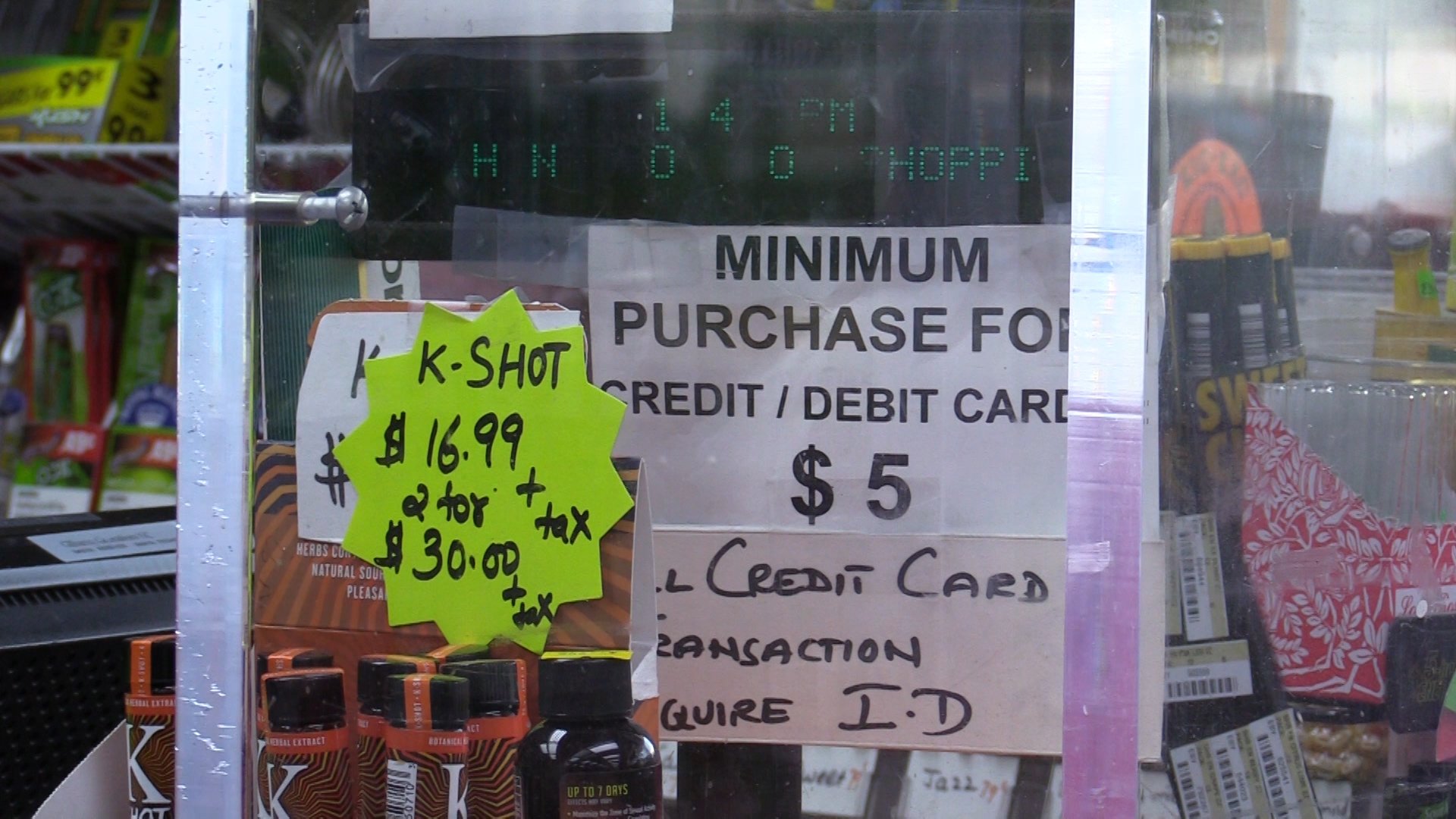
And prior to a 2013 class-action lawsuit that changed the situation, merchants were widely banned by payment processors from charging credit card transaction fees. But now many low margin businesses pass along the cost: for instance, it is common at gas stations, and almost universal at truck stops across the US. And some businesses have long opted for minimum transaction amount for credit purchases.
https://www.the-sun.com/wp-content/uploads/sites/6/2022/03/N...
https://wpcdn.us-east-1.vip.tn-cloud.net/www.41nbc.com/conte...
On the other hand, in places where the target clientele is fully-banked and handling cash is more costly, some businesses find it advantageous to opt solely for card transactions: for instance, an upscale establishment in a city. They may have higher margins that can easily eat the cost, and being card-only also decreases the attractiveness to robbers and discourages unbanked patrons. It has also been criticized for being discriminatory in the same way.
[1] https://news.ycombinator.com/item?id=43993711
[2] working link since original blog is down https://web.archive.org/web/20250517082035/https://aruarian....
Remember when the system was designed in the early 2000s the Internet was much less available and reliable, and when so many transactions happen every day, you don't want to get thousands of passengers stuck inside a metro station only because some Wifi router was down.
This is basically a limitation of the CAP theorem, in these situations there's really no choice but to sacrifice "consistency" and settle for eventual consistency.
I think even credit card payments for transit also make that sacrifice. I had a weird experience using a Visa card to pay for a tram ride because they were promoting it and had a discount. The machine indicated success and let me through, but since I rarely used the card, somehow the payment didn't go through afterwards (the credit card was in a very weird state). If they insisted that all the payment transactions complete successfully for a transit payment, it would be too inconvenient and unreliable to use.
Remember originally credit card payments worked by putting the card under a slip of carbon-copy paper and rubbing off the raised digits. All the digital stuff ontop of that was just for efficiency.
Fixed terminals (like at a train station) near-instantly upload it, movable terminals (like in a bus) have a bit of a delay and sometimes only upload when the bus arrives back at the depot. It is possible to add new travel products or balance from an app / website, but you have to visit a special "pick-up terminal" to update the card.
Can confirm that Suica shows the balance in Apple Wallet.
Every time I see a shoddy piece of work, I know which constraint was sacrificed.
The digital version only works on iPhones, since Android phones sold outside Japan doesn't have the Felica chip, or if they have it (e.g. Google Pixel) is disabled in EU/US firmware because the manufacturer doesn't want to pay a fee for every phone to Sony for something 99.999% of people that will never travel to Japan would use.
Anyway, that problem is long gone.
From the underlying press release (emphasis added): BART PD boosted the visible safety presence in the system by doubling officer presence systemwide and ensuring police are riding trains more. This approach is strengthened by BART’s ongoing use of unarmed Crisis Intervention Specialists, Transit Ambassadors, Fare Inspectors, and Community Service Officers.
Safety efforts were also bolstered by the installation of 715 new fare gates at all 50 stations, a project completed in August 2025, four months ahead of schedule.
More to the point, mone of that is relevant to the fact that the giant gates impose a burden on lawful users as well as any criminals they might deter, nor is it relevant to the extremely slow performance of the automated gates themselves. The experience of riding BART sucks for law-abiding paying passengers.
I don't often do transfers, though.
Felica is bound to a phone with a carrier on a national network, which basically guarantees full traceability of the user. Same for WeChat. PromptPay also binds to a bank account, so again it can be tracked at a gov. level.
On my last trip it only made sense to buy a pass for a single ~4 day segment that included two long Shinkansen rides plus an expensive sight-seeing bus.
But yeah, even settling up at the end of the day with those terminals is still way faster than settling up carbon copies via mail.
I remember when they first allowed card use more than a decade ago and it broke the flow quite a bit at rush hour as people were so used to the Oyster card's timing that they'd run into the back of people using cards or people using cards would run into the gate as it had not opened as quickly as they were used to. Quite a bit of commentary around it during that time:
https://www.reddit.com/r/london/comments/2zc104/that_extra_s...
During my last visit to London (in 2025), it felt noticeably slower than even NYC subway tap-to-pay.
Suica is a whole other beast that isn't even in the same category of speed. It genuinely feels sub-200ms instantaneous.
(I haven't used the NYC system.)
I believe you can't get a physical one from the ticket machines anymore unless you are getting a commuter pass, but I might be wrong.
And a lot of coke machines in train stations, service areas, etc also accept Suica if you prefer (but then you don't get the stamps).
Typically the machines I see which only accept the Coke ON app are in more rural areas that traditionally would have only accepted cash. And I much prefer the app to cash.
Makes for such a smooth journey as most people are doing the right thing.
And that's the difference. IIRC, you have to periodically top up your Suica card with money which then gets deducted from the balance each time you use it.
In Europe, there is no such thing - sure, you can buy a lot of single ride tickets and then use them when you need to, but you have to stamp the ticket when you start each ride, which does seem a little more inconvenient.
- In London you top up your Oyster card and pay a fare according to the zone your travelling to. Metro is gated.
- In Paris your load up tickets in your Navigo pass and pay a flat rate every time you take the metro or RER. It's also gated.
- In most (all ?) Swiss cities you don't have any card to charge and have to get a ticket for every travel (like in London your fare amount depends is zone dependent); however there's an app that let you get your location at the start of your travel and end of your travel and automatically charges you the correct fare. There are no gates.
The European public transport system is not some centralised system that should be generalised like this. The system in the Netherlands has worked like Suica for years (but without the extremely fast card reading unfortunately). You simply tap on with your public transport card or bank/credit card and tap out when you get off. Subscriptions, automatic/manual top ups, it's all possible.
Also, travelers beware: some of the special "Suica" sold at Haneda (and maybe Narita, too?) expires and is completely dead after 30 days, even if it has a balance. I found this out the hard way. Buy a proper Suica at Shinagawa or another non-airport station.
Meanwhile Hobart and Darwin are free PT right now.
(yes, the antenna is in the top FaceID/Dynamic Island area, Osaifu Keitai spec requires a □つ icon wherever antenna is located, which Apple managed to completely ignore)
Because it's not the easiest setting to find: Settings/Wallet & Apple Pay/Express Transit Card
Apple pays the fee for all phones in the world to have the chip. Google only pays for Japan devices.
https://xdaforums.com/t/global-pixel-device-unlock-felica-su...
I assume it's a licensing issue, where Google is too cheap to pay JR for the phones sold outside of Japan, so only setup the JP models and only pay the license for those.