Luanti removed from Google Play due to baseless AI copyright notice(blog.luanti.org) |
Luanti removed from Google Play due to baseless AI copyright notice(blog.luanti.org) |
It explains what every element is, concisely but clearly. I now know exactly what Luanti is, who all the actors are in this conflict, and what the conflict is about. It clearly conveys the who, what, when, where and why of the situation.
Also, DMCA is a damned mess, with the worst people in the world profiting from it and bullying small creators. There really should be better mechanisms to defend oneself from spurious claims.
But the DMCA allows immediate countersuit for false notice with damages. If Google/Youtube actually just forwarded strict DMCA notices and no longer did takedowns once you counter-claimed, you could sue the trolls and collect damages. At that point it's just a free lunch for some bored lawyers willing to publish public domain works, covers, etc that are protected.
It's a rigged game, its better not to engage with.
the specific laws and consequences from ai:
> Under 17 U.S.C. § 512(g)(3)(D), for a DMCA counter-notice to be legally valid, the person filing it must explicitly state in writing that they consent to the jurisdiction of a US Federal District Court.
> If you live in the US, you consent to the federal court in your local district.
> If you live outside the US, you must consent to the judicial district where the service provider (YouTube/Google) is located—which means the Northern District of California.
> For a creator living in Europe, Asia, or South America, filing a counter-notice means signing a document that legally exposes them to a federal copyright lawsuit in California. Even if the creator is 100% in the right (e.g., they used public domain footage or have clear Fair Use), the sheer financial threat of having to hire a US federal defense attorney to fight a lawsuit in California is often enough to make them abandon the dispute.
Im pretty sure this is by design. The big players need to stifle small creators to maintain monopolies, google helps them do this because they benefit in some way.
Trending on HN: Blog post: Sneed now helps with your blargs
Then I go to their homepage and it's like https://knowyourmeme.com/photos/3219377-curtains-for-zoosha
They'll backtrack and apologize - again.
At some point, the pathway for Microsoft to regain some of the goodwill associated with Minecraft is to fire the senior lawyer most responsible for sending out these notices.
Why would anyone with brain give them any good will for that? I might believe them if they would give Luanti 2x the damages and gave in writing that they will pay 10x damages the next time this happens.
I am not a lawyer, but this seems like harassment on a matter that has been previously settled.
Unless corpo heads are prosecuted for copyright infringement(false DMCA claim IS copyright infringement) and jailed or sentenced to death, no change.
It's currently the rage in blackhat SEO: just say you're John Doe from Doeville and competitorsite.com is infringing on your copyright. Google will remove that specific URL from the SERPs and there's a 50/50 chance whether the target gets a notification from google or not.
If they do, they can counter claim directly and it takes 12-48 hours to be reinstated.
If they don't, they have to figure out what's going on by using the Lumen Database (the only way to receive that information because Google is horribly bad at basic legal matters) and finding the notice, which will contain the exact URL (because fun fact: the claim and counter-claim are case-sensitive, the removal-from-serp is case-insensitive), and then do manual counter-claim, and it takes anywhere from 3 to 30 days.
During that time, your competitor will just be gone from the SERPs.
1) open source project publishes source
2) AI scrapes source
3) AI generates code for proprietary game similar to that of the source
4) AI tool scans jar files and finds similar code, triggers copyright violation
The only sustainable solution to these kinds of problems is to diversify away from Google Play Store.
You're someone
Frivolous or not, MS has financial incentive to try to keep this game offline. I think this is going as intended from MS's POV.
It's also not really a "game" so much as a "game engine" so it's not even a direct competitor to Mojang
Its a system that mostly benefits large companies. Just about everybody else hates the system.
Google and Apple can have whatever app storefronts they want, but they shouldn't have a say in what software I can run.
you are not wrong, and that's why apple is being forced to allow alternative app stores. forcing them to abandon checks is not what the majority would want. instead eventually there should be ab appstore choice just like the browser choice that was pushed for some time.
It's great little tool to teach coding.
There is a cost to them for false negatives, if only just lost revenue.
The beatings will persist until morale improves.
It places all the work on the affected parties to prove their innocence.
And suing the fake claim, is years of work and cost. This is why companies like Tracer.AI, ... get away with it. And how the system even gets misused to remove competitors or flat out blackmail.
Even worse is when we have hosting companies in Europe, who simply take American DMCA claims for granted because investigating them costs time and money.
The entire system is broken (by design?).
/Edit: what is with the downvotes? Did i write something that is incorrect?
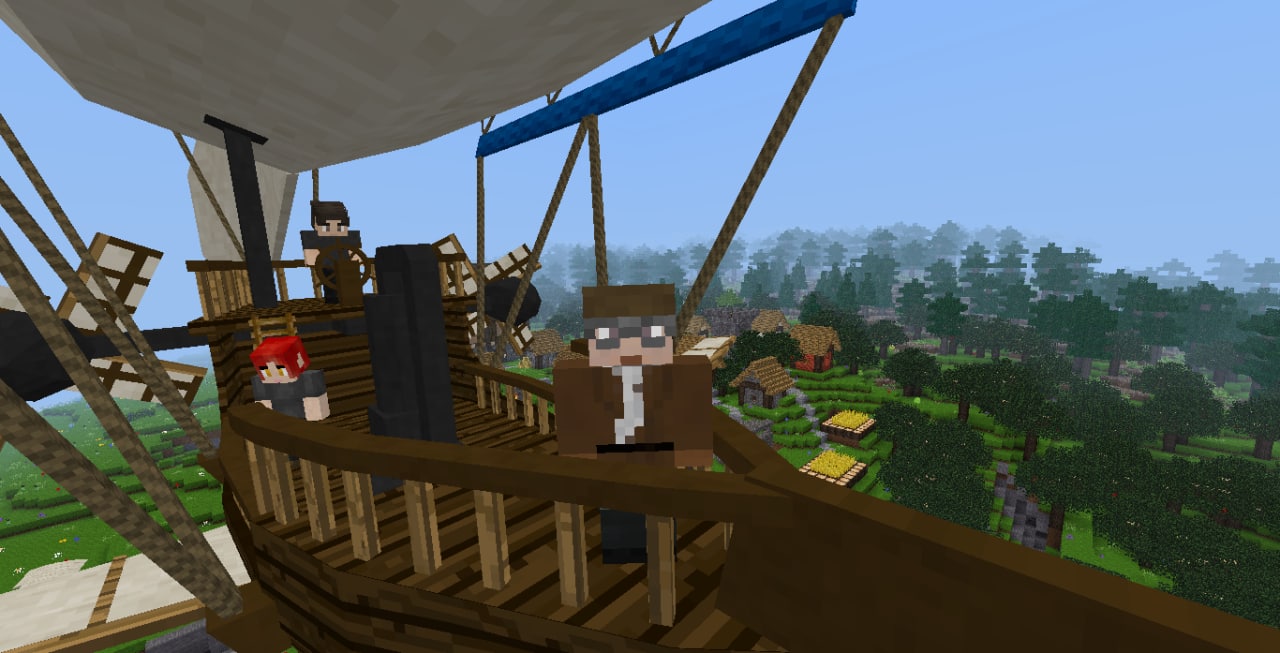
The screenshots are literally Minecraft screenshots. It's a clone, and not a subtle one either.
To call this "Baseless" is hilarious.
Minecraft does indeed have a lot of knockoffs that sometimes even use official imagery (e.g. the creeper). It seems Microsoft is using this AI tool to automatically detect these and submit DMCA requests
If anything, this problem would be fixed by hiring MORE lawyers. Not firing them.
Google should also be sued for violating its DMCA obligations, specifically
Section 512(g)(2)(c) of the DMCA requires that providers “[replace] the removed material and [cease] disabling access to it not less than 10, nor more than 14, business days following receipt of the counter notice”. Google’s failure to adhere to the deadlines specified by the DMCA raises questions regarding its approach toward handling DMCA counter-notices.
When some random person copyright strikes your YT account you have no rights because it isn't based on the law. Its the equivalent of someone going to the manager of Starbucks and falsely saying you are harassing them, then the manager tells you to leave or they'll call the police. One private party told another private party you are a bad person and the private party in control punished you.
If memory serves the whole system came about way back because the big media companies and record companies got together to sue YT after google acquired them. So you might say the system was designed to let purported copyright holders act arbitrarily on purpose.
The essential idea here is that there is a real cost per DMCA notice that turns into a reward for those incorrectly accused. As the total number of DMCA notices go up the more bond money is floating around ready to pay those harmed by the system. DMCA takedown agents now have a real incentive to get it right. The better they are the more money they save. The trick is to set the bond high enough to turn it into a real value prop. The only thing missing, I think, is the upward pressure on the base bond. I think that should be set by the global ratio of successful to reversed takedowns. If the industry is spamming the bond goes up and payments go up. If the industry is policing itself the bond goes down.
The actual answer is to tear the entire fucking system down because it only exists to serve megacorporations, and start fresh, but there's nothing simple about that.
Although I suppose a fixed % would limit how many claims you can file, which might be an issue for megacorporations who actually deal with lots of infringement -- although it would definitely reduce spurious claims.
Hmm, maybe coming up with a good law is actually hard.
The sequence of events is:
1) US votes a law that is hilariously favourable to copyright holders
2) Copyright holders abuse it for a while with non-AI bots
3) Copyright holders abuse it with AI-bots
4) Copyright holders will continue to abuse it until the law is amended.
US executive branch back then was just lobbied by major copyright holders and they literally bypassed much of legislation process around congress by creating and signing international agreements instead.
By the time DMCA landed in congress there was very little that could be changed because US already had to honour intetnational agreements it's already created and signed.
Louis Rossman have a video on it:
DMCA is punitive to platforms who do not correctly adjudicate the law and self enforce, which is why they err on the side of the claimant rather than the accused (or the side more likely to defend their copyright in court).
So, the law doesn't really favor copyright holders, it favors extremely conservative and risk averse behavior from large platforms, regardless of who would actually win a dispute over copyright.
From the article:
>Luanti’s Android app is currently not available on the due to a baseless DMCA notice filed on behalf of Microsoft by Tracer.AI, alleging that Luanti infringes Minecraft’s copyright.
>Luanti is a voxel game-creation platform where anyone can make, share, discover, and play blocky games.
my old comment for reference:
you doubt what? the claim they are filing is that luanti violates the copyright. that's the point of filing a DMCA notice. that means they are alleging that luanti infringes minecraft’s copyright. what else could it be?
https://www.luanti.org/en/#gallery
Even though those are mods, it's a bad look to be holding those up as reference game images.
And there's no screenshot of the two Luanti games that come the closest to Minecraft, both in terms of looks and gameplay. None of them are included in the standard Luanti distribution.
One can download games and mods from ContentDB (or directly from Luanti itself); ContentDB administrators are looking closely at the content users submit, from experience they will refuse your submission if everything is not properly licensed, even when the asserts are obviously FOSS (creators often include each other's stuff). They even were cautious about generative AI because the copyright assignment was unclear for them. They also have a DMCA page [1].
Long story short, Luanti is a respectable platform. They respect copyright and licensing (even for FOSS code and assets, unlike some private organizations). They also organize game jams and promote original content.
If your whole shtick is creating blocky games with retro-easy-to-recreate 8x8 or 16x16 textures it's not really weird people easily imitate it.
Even if they were similar, artistic style is not protected under copyright.
Very common to find pitch shifted audio getting resold on Unity store or web, images/3D with intact watermarks/meta-data, and scraped shader code. If you are credulous enough to buy files from a shady online seller, the copyright/trademark liability almost always falls on the person that publishes the IP. You can do everything above board, and still get sued as other license holders may register the asset signature with anti-piracy/YT bots.
For example, you could buy BBC/NBC/Sony libraries off ebay/web for a few bucks, but they will 100% still sue you into bankruptcy if you ever publish content with their media IP.
"AI" vector search can produce similar results of existing scraped works, and almost every LLM knows Disney Mickey Mouse. How LLM are trained means isomorphic plagiarism will occur regardless of data granularity. Just like how mp3 were a lousy highly compressed version of CD audio, the output does not have to be a verbatim copy to trip copyright and trademark IP laws.
Isomorphic plagiarism becomes less obfuscated when compiled into standard executable code. However, some firms actually used human session chat admins for data labeling/edits.
https://www.youtube.com/watch?v=o1iLPxwgV4E
People may still lose even if they are right. If you resell something you didn't actually make yourself or purchased royalty free perpetual rights from the authorized holder, than the liability still falls on you when content rights change.
This is why fun indie games sometimes disappear. Some may not like these rules, but most play by them to survive as a business. =3
> The screenshots are literally Minecraft screenshots.
Irrelevant to the DMCA claim.
> It's a clone, and not a subtle one either.
You are incorrect. Luanti is not a minecraft clone. It's more akin to Godot. I can import Minecraft assets into Godot, but it does not make Godot a copyright violator because of my actions.
> To call this "Baseless" is hilarious.
I would say it's justified.
Yes, it's inspired by Minecraft. The screenshots are of voxel-based survival crafter games you can build with their platform. The textures are not Minecraft textures. They are similar in style, sure, but that's not remotely the same thing. You can't copyright a general visual style, nor can you copyright a game genre.
To call this anything but "baseless" would be hilarious.
More likely that Minecraft was inspired by Luanti since Luanti was released first. (at least, formally released)
Never mind that the things in those in-game screenshots aren't even in the play store app, they're separately downloadable things.
They're not. It's a voxel game engine with an open source history dating back a year (October 2010) before Minecraft 1.0 was released (November 2011).
There are plenty of games for Luanti that have different textures and objectives.
It's all open source. Download it and try some of the different games.
https://www.luanti.org/en/#gallery
What percentage of the population would see those screenshots and say "Definitely Luanti" 0.00001%? 0.001%?
They are literally not Minecraft screenshots. Your statement is a lie.
With intentional bias built into the system, Google gets favorable treatment on remuneration for the commercial copyrighted content that they host. The fix is a revision that revokes safe harbor protection when an accused party is disenfranchised by omission of the counter notice process.
https://abcnews.com/ABCNews/finnish-businessman-handed-12100...
Not sure how Apple handles DMCA but I know they're known for capricious arbitrary actions and being impossible to talk to. Their search and navigation is also total trash.
That hasn’t been my experience. The first couple of layers are sort of “inflexible bureaucrat,” but it doesn’t take long to get to an actual human, with authority to act. In my experience, I’m usually on the phone with someone, within a day or so.
Yes it is absolutely a dumb game and an unfair process, but playing dumb games and using unfair tactics to inflict pain go both ways.
In addition, some platforms have their own parallel dispute resolution processes that have to be navigated first before you can make a formal DMCA complaint or counter-complaint. The reason for this is because those platforms have a lot of user piracy, and having their own system to ID and takedown work their users are reuploading makes it easier for them to negotiate their own licenses to the work. These systems are unregulated and often biased in favor of the legacy media companies who are selling them these rights in ways the DMCA process isn't.
The average attorney is not an expert platform Kremlinologist, and law schools don't teach how to fight YouTube Content ID - mainly because the things that actually work against Content ID are things that would get you punished harder in a real court of law.
Finally, the actual case we're talking about - Luanti - is a lot more involved than typical piracy cases or DMCA abuse cases. They are, after all, trying to make a game engine for Minecraft-like voxel games, and the screenshots they're showing off of those games are not entirely dissimilar to Minecraft. This is not "Luanti is an infringing copy of Minecraft", but "There is enough similarity to survive a motion to dismiss and require an actual trial". At which point the actual cost to defend goes from 4-5 figures to 6-7.
[0] The massive payments attorneys get for representation are priced into the cost of education and testing required to become a licensed attorney. As a result, every minute you spend representing someone who can't afford you is time not being spent paying back student loans.
Congress could obviously not pass ratificarion, but you know how its usually going.
https://www.bbc.co.uk/future/article/20260414-the-monkey-sel...
The owner of the Camera in this case lost copyright ownership claim, as did the rights-group representing the monkey. =3
So with a straight face, you think a jury wouldn't call this Minecraft?
https://www.luanti.org/media/gallery/5.jpg
Also Luanti probably could doge all this if they just ditched all the blatant minecraft clone mods. A mining game with blocks is totally fine. If you look back at infiniminer, it's clearly a different vibe of the same concept.
That'll all become glaringly obvious when this is reinstated, because the copyright claim is bogus.
You can't take Minecraft assets, mix the pixels around a little bit, and then be legally free and clear. If the public looks at pictures of your game, and they say "100% it's Minecraft", you're gonna have a bad time.
If it was a clone, surely the images would be the same.
There are a gazillion cases that establish this, and the reason why you can't just paint spiderman green and start selling t-shirts with "spyderman" on them.
None of these three pillars of intellectual property law are an issue for Minetest or Luanti. The engine itself is a long-standing open-source engine that they decided to build a block-based game inside of. The assets used to build that game are entirely original or licensed under an open-source license. They are not derivatives of proprietary work. The engine has been released under the names Minetest and Luanti. Neither of these are a conflicting trademark with Minecraft, and no one has claimed any customer confusion. Finally, the idea of a 3D world composed of different types of blocks that can be created and destroyed is not protected by any intellectual property.
I am not a lawyer, but I study these things. 99% probable this gets reinstated with no further action.
If it were inalienable, things like regional distribution agreements would be void, since you could sign away your ability to sell in a certain country and then compete with your distributor anyway.
Let's keep some perspective here - there is no "inalienable right to sell apps to smartphone users via a private commercial storefront".
This is unacceptable in a world where governments and businesses are increasingly gating services behind those same marketplaces.
Something’s got to give here. We can’t allow people to create a captive, gatekept marketplace and then create/allow significant pressure that herds people into that same marketplace.
IMO, break up all the gatekeepers using antitrust and require that critical infrastructure and businesses (government, banking, utilities, payments, etc) allow alternate access paths that don’t require a smartphone.
I don't know in this particular case of Luanti, but this could be people's livelihood we are talking about, there should be some sort of legal due process.
It really feels like middle-ages kind of justice.
"Government policy and critical services have made it so there are functionally two markets for mobile software, each owned by the manufacturers and developers of the mobile OS and hardware"
This isn't like physical sales, where I can open up a store anywhere. This also isn't like classic software sales for windows/mac desktops, where I can sell you a program from any website or physical store.
---
Functionally - this is like these private companies revoking your business license at their whim. I don't find it a tenable position.
The consequences do not matter. Voiding regional distribution agreements is a small price to pay for actually having rights.
Also nobody would offer the contract in the first place because the employee would keep their inalienable right to choose how they spend their own time (not working).
EVERY contract is about giving something up in exchange for getting something. In most legal systems a contract is void if either party gives nothing. So in a world where nothing can be signed away, no contracts exist at all.
They're the same genre, but obviously not the same game. Is only one voxel sandbox game allowed to exist in the world? What's next, only one platformer can exist? Only one action movie is allowed to exist? Only one power metal band in the world?
Again, aesthetic is not copyrightable.
IP protection is about reasonable confusion in the public. Not experts in field getting confused.
https://www.luanti.org/media/gallery/5.jpg
C'mon...
That's not a standard anywhere in copyright law. You may be conflating it with parts of trademark law.
> https://www.luanti.org/media/gallery/5.jpg
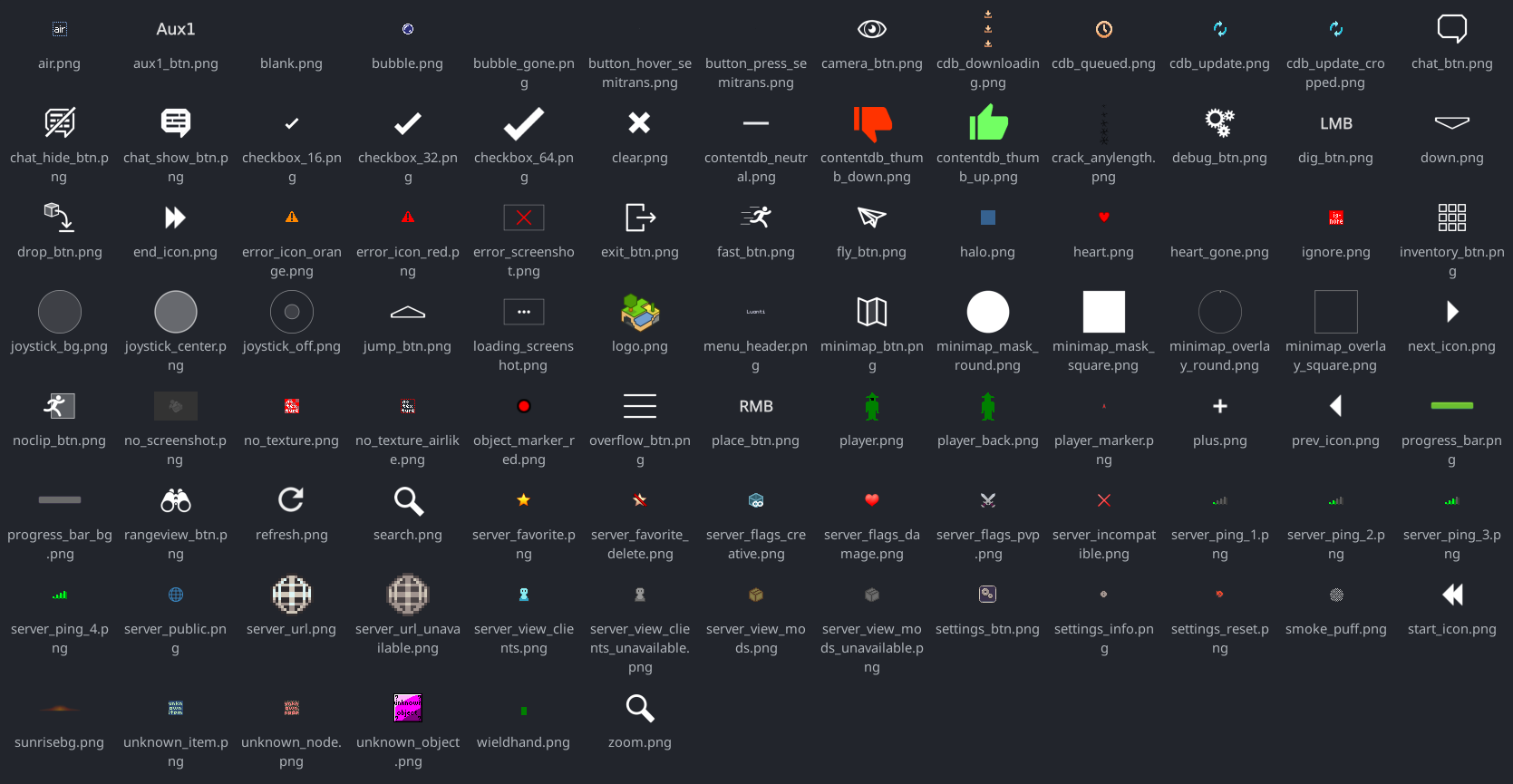
That's a screenshot of a game made within Luanti (the voxel game engine being DMCA'd). The blog post shows all the textures included with Luanti itself (https://blog.luanti.org/static/blog/2026_dmca/builtin.webp).
Even then, it doesn't appear to show anything actually copied from Minecraft that would fall under copyright protection - the assets appear to be original.
It looks more like a Runescape asset than a Minecraft one, for example:
https://runescape.wiki/images/thumb/The_Adventurous.png/1200...
"Obviously the real Spiderman has an "i" and not a "y" in its spelling!!1!"
Explain that to a jury in front of a judge and Disney lawyers and see how your legal theory goes over...
If this were ever to go to a jury trial, both sides would get to present their evidence, which includes explanations of how Luanti is different from Minecraft.
If you were correct, then basically every accusation of substantial similarity would be upheld in court because apparently juries are morons and they don't get given the full facts.
However, you also have failed to provide any support for your assumption that this would go to a jury trial; the article doesn't mention any kind of trial. DMCA notices are adjudicated by the platform owner, with very little transparency, and certainly no jury of peers. If it doesn't get resolved by the counter-notice, then maybe Luanti will sue (Microsoft? Google? Tracer.AI? all of the above? who knows!), and maybe it would go before a jury. But given how lawsuits in the US go these days, that's pretty unlikely. Odds are if there is a lawsuit, it will be settled before a jury ever gets selected.