/s
1. Electrify almost everything that can reasonably be electrified.
Move quickly to EVs, and replace anything that can practically become electric with an electric version. Self driving & fleet utilization will push transportation cost per mile lower than ever before.
For the power grid, data centers, and other large 24/7 consumers: solar + wind + battery storage. Deep geothermal also looks interesting.
Build lots of desalination capacity.
Maybe even planes can eventually be electrified. Imagine shorter hops with battery swaps at sea (aircraft carrier sorts of things). Too crazy?
2. Deal with the things that are much harder to electrify.
Cargo ships.
Long haul aviation, if the electric plane idea really is impractical.
For those, we can turn energy + CO2 into liquid fuels, creating something closer to a closed carbon cycle.
3. Remove excess CO2.
CO2 persists in the climate system for 200+ years, so getting emissions to zero does not necessarily return atmospheric CO2 to previous levels.
We will need to remove enough to be net negative & over time bring it back down to the CO2 levels we know worked long term.
That takes energy. Fortunately, solar + wind + storage are cheap enough now & getting cheaper.
4. Find places for all that solar.
Deserts are obvious.
Floating solar could potentially contribute.
Agricultural land is interesting too. Agrivoltaics can sometimes provide useful shading while still allowing crops to grow.
5. Deal with the transition period.
Once we are making a serious transition toward decarbonization and carbon removal, it may make sense to investigate temporary solar geoengineering, such as injecting reflective aerosols into the stratosphere, to partially counteract warming while atmospheric greenhouse gas concentrations are being brought down.
The purpose would be to stop the feedback loops such as more forest fires, thawing permafrost, and loss of ice and other reflective surfaces.
Obviously geoengineering has major risks and should not substitute for reducing emissions. But as a temporary bridge, it seems like something that deserves serious research.
We can do all this.
None of it requires magic. We already have, or can plausibly engineer, most of the pieces.
Europe is now really stuck between two huge enemies, regarding climate. We can do a lot to prepare, we just need to wake tf up.
Our Union gives us many advantages. We just need to use it before our enemies destroy it.
Agriculture is a huge pollutant, so we should take steps towards alternatives that don't require large scale animal farming.
Fashion is another gigantic pollutant, where fast fashion generates and discards more clothes than it is feasible to wear.
etc.
Something like 40% of all shipping is moving hydrocarbons around the globe
1. https://news.harvard.edu/gazette/story/2023/01/harvard-led-a...
But it will become more uneven, with droughts followed by torrential rains and floods. We simply need to adapt by creating underground water basins that store torrential rainfall preventing floods and also serve as buffers for when the drought comes.
I do believe places like Spain could see more desertification, though. But they were at the brink for centuries in any case, especially inland.
They still remain deserts nine to ten months out of twelve.
The water saturates the soil, can’t percolate to underground aquifers where it could otherwise be stored, and runs into (ephemeral) rivers, washing away some of whatever is left of the soil with it.
I wouldn’t be surprised if two places could have roughly the same yearly amount of precipitation yet look completely different depending on how the rainfalls are distributed over time.
"The global greening continues despite increased drought stress since 2000" https://ui.adsabs.harvard.edu/abs/2024GEcoC..4902791C/abstra...
"Earth observation data shows that most European urban areas are becoming greener" https://www.sciencedirect.com/science/article/abs/pii/S02642...
Since they can't fix the real problem are trying to go "green" in counterproductive ways that make things worse: blowing up nuclear plants or taxing cow fart.
You can cut all the city hopping you want and it won't make the slightest difference.
Europe as a whole emits 12%.
If the EU mandated that products imported are made in a carbon neutral fashion, then importers of products will pay attention. Unfortunately it means higher prices, and the governments will get voted out of office by people voting for the populists selling the electoral promise of "Make Prices Low Again!"...
In bigger cities, it might be closer to 20-30% of their economy.
Take that away, and it would have a cascading effect through entire countries.
All it took was one big rainfall a few years ago, and California has been out of drought ever since then. The reservoirs have been above historic norms and at the end of this summer, it’s only “abnormally dry”. Compare that to a few years ago where the entire state was mostly in an exceptional level of drought.
Droughts and heat waves suck and many people are suffering but nature goes in cycles and it will get better.
During this trip, I was kind of shocked that things felt a bit more Australian to my eyes .. the grasses are dry and barren, the beautiful city parks of both Budapest and Vienna dustier than usual, the Danube water level definitely noticeably lower than I remember ever seeing.
I’ve long been encouraging my European friends to not take the abundance of growth for granted, and now we see it in the environment, plain and clear: the worlds’ weather is changing.
A week of sweltering heat is predicted for us again in Vienna, and as we get started on September and then October so close, two thoughts are on my mind: use this opportunity to go for more dips in the Danube, and .. I wonder what the floods of late-autumn will bring, because .. inevitably .. this super dry summer means there will be heavier rains in October. Might be we look back in a month or two and wish we had this dry heat back again, who knows ..
Either way, neither city is particularly comfortable in the heat. A hundred or so years ago, the heat retention was a feature. Now it’s a bug.
I'm also in Western Europe and almost always needed a car for my commutes to work, unless I was willing to accept a 1-2+ h public transport commute each way, because tech employers where I live love locating their offices in the sticks where land is cheap because they're broke and cheap, and the city hasn't significantly updated public transport infrastructure in ~30 years, but the population and size of the metro area grew by like 3x.
>Before people tell me that I am an exception: I know other people like me in various other places in Europe!
The thing is, Western Europe is not a country, but a collection of various countries with various economies, cities, and infrastructure, and various people with various housing and career locations, some close and well connected to public transport, some not at all, and from my circle of acquaintances, yes, you are the exception, as most people I know get to work by car.
So, you can't possibly throw such blanket statement over everyone in Western Europe, unless you're massively obtuse or living in a bubble without realizing it.
Like, I'm sure most people in Munich, Paris, London, Madrid, Vienna, etc can easily get to work on the excellent public transport they have, but I don't live there and don't have such amazing public transport, so then car it is for us.
>It is possible and actually good for your body to have to move, at least to the train station, carrying groceries etc.
Bruh, I only need a car just to get to work in reasonable time, not to move or carry groceries.
I get my groceries from the supermarkets 5-10 minute walking distance to my place, but I don't have the luxury of employment jobs within the same distance, so car it is, unless I want to be wasting my life switching connections between slow and infrequent trams, busses and trains which often suffer delays.
And regarding the "body movement" as a pro for public transport, I'd rather have more free time to move in gym and to the workouts my body condition needs, rather than waste my time walking and sitting/standing on public transport, as that's not an actual workout but a waste of time, as all you can do is browse HN on the phone with the hand that's not grabbing the bar. Driving is also a waste of time, but at least it saves me almost 1 hour each way which is massive time save that I can use how I like.
China's figure aren't that great on their own, with exportation deducted.
EDIT: 12% is all of Europe. This thread is about the EU.
Unless you count the historical city center of Venice as a big city I doubt you'd get many big cities getting even close to those numbers
I can't easily/quickly find some numbers but if we want to accept, with a grain of salt, Gemini research on this even in Venice (I think it counts Mestre as well) it's ~15% and that's the highest it found.
https://assets-global.website-files.com/6329bc97af73223b5759...
In areas like Valencia there are ancient irrigation systems and water rights controlled by water councils older than many countries. I wonder if the UK will need to do similar, irrigation ponds, flood control structures and canals to control the flow of water through the landscape.
The summer heat, the drought, combined with winter cold spells and now usual late spring frosts have all but destroyed the country's agriculture too. The new government has initiated a water retention plan, but it might be too little to late.
Whenever I return to Australia (also mostly rural locations) the major difference I notice is bird life. There are so many more birds in Australia. Maybe they’re just noisier.
We put feeders out in our Austrian garden and do see plenty of small birds, as well as woodpeckers, crows and pigeons. However, in Australia there are lots of small birds too, like finches and wrens. As well as magpies, currawongs and the large noisy flocks of galahs and sulphur crested cockatoos. King parrots and rosellas regularly seen. Maybe it’s a regional Australia phenomenon, but it really stands out to me.
seen Germany's insect decline written about but didnt expect it to be noticeable
I occasionally watch development of infrastructure projects in Romania, videos such as this one: https://www.youtube.com/watch?v=eETeHvExMxw . This is completely different from what I used to remember. Completely dry fields. Fields used to be green at this time of the year. So much dust everywhere.
I do think I'll return one day, because somehow there's still some part of me that's melancholic about the places I've grown up in. But it now seems that if I wait many more years it will be a completely different landscape than the one I left, and not in a good sense.
Locally (New York state), things have been so wet we're seeing premature leaf drops from maple trees due to leaf fungus (tar spot disease).
Before all the industrial age river straightening that has gone on until even rather recently with damming and concrete encasement projects in I think even the 1990s, you not only prevented the river water, i.e., mountain glacial waters and evaporative rain waters from meandering and saturating the lowlands, but you even speed up the pace not to mention shortening the distance.
Sure, it wasn’t a fast process, but as anyone who has had a small water leak in their home can tell you, constant flow of water at even a small rate adds up over 24/7/365 and 200 years. You’ve literally not just been draining all your fresh water into the ocean, but you’ve been draining your water battery in the form of the saturated wetlands, soil and structures like the gravel aquifers of Central Europe of water. More people are befuddled why there is a drought after they drained the water cycle battery for 200 years, not to mention that the European population has almost quadrupled over that time and people used far less water in the past, not even to mention that the EU is doing to drive tens of millions of more people into Europe.
Ironically and in seemingly typical contradictory and counterproductive manner, the EU seems to quietly and maybe even ignorantly agree with me based on several directives and regulations they’ve been passing to restore some wetlands, river flows, and floodplains. Unfortunately it’s very little and very late (as people may be noticing) the rule of thumb is that what was destroyed takes at least 6x the effort to restore.
The real issue here is the loss of the glaciers, which are the actual "water batteries". Previously a lot of snow fell in the winter, stayed there, and slowly melted off during the summer. Nowadays a lot of rain falls during the winter, and it immediately flows downstream, with nothing to melt during the summer.
Population is completely irrelevant here, by the way. Any water used by people ends up going back into the river after some filtering. No need to invent an immigration conspiracy.
Plenty of ways. That's what we have science for. For one, why choose 19th century projects when we did millenia of terraforming, mostly by doing away with forrests and wetlands, but also planting artifical forrests over dry sand areas (see the Cap Ferret fire) etc. etc.
but also, the heatwaves of this summer mostly consist of hot air from Sahara being driven to Europe and staying there.
> that the EU is doing to drive tens of millions of more people into Europe
what
Interesting how lived perception of resource scarcity and socio-economic change will attribute it all to ... others.
It would be interesting to see whether one could apply that to European waterways as part of marshland regeneration.
But if drainage changes were the primary cause, we would've seen drought severity increasing across the time period where straightening/etc were happening... instead the drought severity increases begin _after_ that period, better aligned with temperature changes.
Additionally, your analogy to a water leak from a tank doesn't hold, because the water recharges over time...
Further, your complaints about immigrants also doesn't make sense, as water usage has been going down (and residential utilization is quite low, altogether).
As such, my theory is that you're just a right-wing crank who wants to find a reason to deny global warming, and to hate immigrants.
"The global greening continues despite increased drought stress since 2000" https://ui.adsabs.harvard.edu/abs/2024GEcoC..4902791C/abstra...
"Earth observation data shows that most European urban areas are becoming greener"
https://www.sciencedirect.com/science/article/abs/pii/S02642...
What's the process here for that region? I don't think the moisture is waiting anywhere.
The thunder storms we’ve had in Vienna in the last few years have produced amazing floods - reminiscent of the desert storms of Australias north-west, where I am from - and a couple years back, the engineering of Viennas water ways was put to the test, with the floods overflowing railway lines and traffic arteries of the city in ways not seen much before this decade...
So it has really not rained outside the high pressure zone. So I am not really sure where it all would be.
> tne
broke my brain for a second. Still does, to be honest. I don't think I remember seeing this typo before!
Also of this so they can gain even more millions by exporting all the food across the border. Time to block some more highways, destroy some more property and kill some more people in order to secure those sweet EU subsidies.
The ensuing week in the Czech Republic was lovely.
Also soil erosion is a problem, so I think I'll live to get it all to a desert.
But, parks of dead grass, and dust devils blowing in the corners? Can’t say I’ve seen that much over the decades of visiting the region. In fact I don’t think I’ve ever seen so much dry, dead grass.
I, for one, am very grateful for my neighborhood turning the streets into cooler, greener little oases for pedestrians. Perhaps those eucalyptus trees the Schönbrunner Zoo keeps for its koalas will be of use in providing avenues of shade in the decades to come, who knows …
It was getting bad already, but like this? Absurd.
Sunlight never reaches the ground because of the tall giant trees so there's no undergrowth. It's just dead leaves and mushrooms.
Something that was completely 100% noticeable was that during this drought of several months this forest was still incredibly healthy. You walk into the forest and the temperature drops several degrees Celsius and the ground still seems wet. I could tell that the groundwater level sunk maybe 4 feet by looking at some pits that normally have water. But still the ground didn't feel dried out.
I compared this to a forest where they do maintain the forest and harvest giant trees for wood. They don't clear it but just by cutting out these tall trees they let sunlight reach the ground and dry the forest out.
That forest was crispy dry, almost dusty in recent weeks. One spark could burn it all down easily. We had... 2 properly rainy days through whole summer? Few thunderstorms but they were very local, and all of them avoided directly our area and that forest like plague.
At least those crayfish managed to survive as I've seen 2 last week, they are more susceptible to water pollution and some brutal fungal infection which can be brought from other streams and basically sterilize whole stream (happened in other parts of our canton around Lausanne). Water somehow didn't stop. Back where I come from in eastern Europe their local crayfish weren't often so lucky - streams bone dry.
the mittelland seems dry but since i’m walking through farmland, mostly, everything around me looks green, while i walk on dusty paths.
today was very hot.
Anyway your concern about losing moisture stored in trees isn't really warranted, the tree does not give back moisture.
In the last years Europe had suffered a wave of wildfires at a level never seen before. Most of it started by people and many of them provoked in a sort of coordinated attack. Also there is a war in Ukraine blowing up everything at full steam and releasing huge amounts of heat to the lower atmosphere. Both facts must be taken in mind to understand the current situation.
Europe has suffered a damage in many ecological buffers that that may be recoverable unless they suffer a second attack. A forest can be burnt just a limited number of times before it turns into a desert. Monegros was one of the biggest oak forests in Spain. The name can be losely translated as "black hills" that suggest repeated wildfires as wrong management techniques. Take a look at the place now. Australia was also covered in rainforests in the past.
I really hope that when the nature sabotage stops, the situation will improve a little at least, even if we are at a much, much worse place than before the Ukraine war.
[0] https://en.wikipedia.org/wiki/Atlantic_meridional_overturnin...
>Historically, CMIP models, the gold standard in climate science, show the AMOC is very stable; although it may weaken, it will always recover [...] In 2020, research estimated if warming stabilizes at 1.5 °C (2.7 °F), 2 °C (3.6 °F) or 3 °C (5.4 °F) by 2100; [...] does not approach collapse,
Climate change as a whole requires a fundamental shift from the basis of almost all chemical manufacturing and transport logistics. And doing so will cause cataclysmic changes to the socioeconomic standings of entire regions of the world.
(Renewables were not fully competitive with fission until the 20teens, too late.)
It’s dialed in.
That’s not to mean replacing stuff with non carbon emitting sources today is worthless. It’s very important. Right now we are dialing in the next escalation of the problem, and we can still blunt that if we give a damn.
One thing you can do today is keep arguing against the romantic anti industrial unscientific greens. Degrowth and “abstinence based” policy will never work. People will never go for it, and we are never returning to pre industrial times. It’s a fantasy. If you try to force it people will elect anti environmental populists (as they have) and you will get the opposite of what we need.
Fantasies displace realistic solutions in the discourse, and “everyone needs to become poorer” gives anti environmental and fossil fuel industry shills a way to frame their case as “we are on the side of human development.” Don’t give them that argument. Stop it. It also won’t work with developing nations. “Hey Africa, we know we colonized you and all but can you do us a favor and stay poor to help fix the problem we mostly caused?” There is not enough “fuck you” in the universe for that one.
The solution is to replace fossil fuels with non carbon emitting sources, not to stop people from using energy.
The fantasy is that an economic system predicated on infinite growth can be made compatible with finite resources. Take, for example, the fact that renewable energy keeps growing as a percentage of total energy generation, yet total GHG emissions keep rising. That's a result of the system of incentives set up by capital. Yes, the economy can become less coupled to resources (as it has), but there is a limit, unless you seriously want to argue that iron (for example) can be an arbitrarily small portion of the economy.
An economy is a method of allocating resources. This economic system is extremely terrible at meeting base human needs (consider that we produce many times the amount of food that's needed to feed everyone's needs, but massive amounts of it used for industrial meat production and biofuels).
> we are never returning to pre industrial times
This is an absurd strawman.
> everyone needs to become poorer
This is, in fact, the industry propaganda. What degrowth advocates for is taking as our first priority meeting human needs and living sustainably (which can be made compatible with most of the technology we have today in some form), rather than the ideology of growth for growth's sake, which mainly results in massive amounts of wasted resources and funnelling wealth into the hands of a few.
> “Hey Africa, we know we colonized you and all but can you do us a favor and stay poor to help fix the problem we mostly caused?” There is not enough “fuck you” in the universe for that one.
This is misdirection. Getting water, food, shelter, and medicine for everyone on the planet is well within our means as a species. It is the ideology of free movement for goods but not people and infinite growth that makes it impossible to meet those needs, because it requires and underclass who can be used for cheap labour and contained in states built for that purpose.
It's not poor people who stand to lose from degrowth, it's the ultra rich.
We are, one way or the other. It is just a question of the choices we make on the way and how pre-industrial we end up.
There is no a position of leverage, the climate is behaving as modeled and expected. We know what will happen next.
Even France, that is heavily pro-nuclear, can't find the economics to build new nuclear energy at decent pace.
Also, nuclear was not replaced by more carbon, except again a for a couple of years in a small country (by global standards) called Germany. Everyone else is planting more clean energy.
What we did: growing China and all Asia at high rates based on coal, for decades. Offsetting by a lot internal combustion engine efficiency by buying bigger and more cars. Buying stupid and useless stuff on the other side of the planet. Everyone first hobby today is "travelling the world", preferably by plane. Being 10 billion people, and richer (more capita and more consumption per capita). None of those thing would be solvable with more nuclear plants.
And now, not even the French are pursuing them, sending the strong signal that nuclear is off the table as anything but a minor contributor to stopping CO2 build up.
And then you are also going to trust the same people when they are saying the waste issue is solved.
If your arguments are luddites and fearmongering you have not improved trust in any way.
1. The fact that nuclear power has been quite safe so far does not mean that it would have been just as safe if its deployment would have rapidly spread.
2. Nuclear energy is unfortunately tightly coupled with nuclear weapons, as well as the treaties and geopolitics that were designed to keep them only in the hands of the few. Quite many late 1900s crises in Europe could have looked different if nuclear material was even more widespread than it was. I don't even wanna think about nations outside Europe that have been extremely unstable in the past and in recent history.
3. Seeing how intensely fossil fuel companies spread misinformation and disinformation about green technology and climate science, it's hardly a far-fetched idea that that same industry had a hand in helping policymakers steer away from an energy source that would unseat it from the throne.
* Building nuclear plants is a 5-10 year plan. More if you haven't built them in a while.
* The first economy in the world has quite literally started wars over oil because it wants to keep using it.
* The countries that would be the biggest emitters right now are also the ones doing the most in electrification.
Building more nuclear wouldn't have changed shit: there is an ongoing work to maintain the world dependent on fossil fuels. We can't even get electric cars to properly pick up.
Climate change is related to our consumptions, period, focusing only on energy or transport doesn't tackle the whole problem: we consume too much, eat too much (cattle and fish in particular) and destroy too much in our quest for more and more.
Inefficient transport or energy is just one aspect of the whole problem.
But I'm tired of hearing how it is just a matter of energy or transport, it's literally missing the forest for a tree, even if it might be a particularly big one.
When will it be real? When your home burns down due to a forest fire? When there is no water? When there is no food because everything is too dry? When a storm destroyed your home?
Those who are most loudly opposed to universal healthcare switch their story instantly when they or a loved one gets in a terrible accident or develops nasty cancer. The jump to the socialism of go fund me in a heartbeat.
I think it will be the same with climate change. Entire cities or states could be really bad with millions displaced or dying but others will still deny it because they are fine. Once it hits them personally, they’ll be screaming bloody murder blaming everyone and saying they need assistance.
https://drought.emergency.copernicus.eu/tumbo/edo/map/?prodC...
Also in southern europe summer is generally a dry season, and rainfall happens mostly in autumn/spring. One does not expect much rainfall to happen in the summer. In contrast, in central/northern europe summer is often the wettest. Having an overall dry summer is a common thing in the south, but not as you go north. Maybe this factors in on computing drought indices.
Spain itself has very diverse climate, so not sure what applies where there. But other parts of the south had plenty rain in the spring. It is lack of rain/snowfall in the rest of the year that can create problems there more than lack of rainfall in july. And a lot of what people describe, like brown/yellow grass and vegetation, is normal part of the cycle in august in the south already.
Who cares if a small burger pollutes more than commuting with a SUV.
I mean, it's just hard to care or do something, these things should be properly taxed, but there's no chance this would be popular.
But it feels we're powerless beyond minor examples we can set something everyday.
Can you give some references basing that?
I would like to educate myself a bit (I'm a vegetarian myself)
This affirmation only holds up for factory farming / intensive animal husbandry.
Extensive pastoralism (aka free-ranging grazing animals) don't pollute per se, and if certain conditions are met (regarding population density), they can have positive effects on (already anthropicized) ecosystems by linking ecotopes.
Ruminant meat is the best food there is for humans. (i eat daily as part of ketovore diet)
The above is a serious threat though. What do you do, in a democracy, with people who are dangerously uninformed?
Whereas we really need to slow it down so that it permeates the ground
You need significantly more to properly saturate the earth, especially after a drought.
Also quite interesting sometimes what plants don't have issue with the dryness - often quite exotic ones originally from the Mediterranean or from Asia.
But who is going to get screwed hard is a lot of the rest of Asia, thanks to the Iran War taking out a lot of fertilizer sources...
Europe's scorched landscapes seen from space after summer heatwaves
https://news.ycombinator.com/item?id=49312413
And a great photo gallery here:
Europe's drought reveals medieval buildings, Nazi warships, mammoth remains
Let’s start acting more like a kardishev II civilization.
These owners don't care about any of your feelings on climate change.
Would you rather than they kill stories relating to climate change and pretend everything's fine instead? If not, what's the actual point of bringing that factoid up? Sure, rich people flying in private jets might be bad, but I'm not sure why it deserves extra condemnation just because they happen to own a publication that's reporting on the effects of climate change.
Give me a break, what does this have anything to do with the content of the article.
That. You can't reach these people with reason, the whole debate, the wholse society and entire law has to abide to their feelings.
The real costs are externalized.
I find it pretty ridiculous how the carbon taxing is extremely heavy on cars, but pretty much non-existing for air travel here. Tourism is a terrible industry that doesn't even contribute that much to our economy, depletes the housing stock, and removes local businesses and culture, but the tourists are always prioritized by government.
The huge swath of people are incentivized to pretend nothing is wrong, and the vast majority can’t do anything about it so also pretend nothing is wrong.
Everyone is living in this world where we still depend on each other to survive, but connected through technology that makes it seem like we don't. The problems that people face are magically solved behind the scenes.
As such, nobody really has a sense of community or belonging, so nobody really thinks past the virtue signaling aspects of how to preserve, protect, and grow that community.
And the people that do are forced to inconvenience themselves while they see others that don't care.
The alternative to fossil fuels and the climate crisis is basically an incredibly deadly and uncomfortable step out of the industrialized world. No one is making that decision. It's a fancy trolley problem where the amount of people on the tracks has 10 figures on both sides and blurry timelines.
Just the increase of gas prices due to the iran war is going to cause some fucked up harvests in africa, south america and asia. The poorest farmers aren't able to afford fertilizers. I have a coworker who has ties in Guinea-bissau. The farmers there are basically getting spitroasted by the combination of climate changed caused droughts messing up their cash crops followed by increased oil prices due to wars they have nothing to do with increasing the price of their agricultural inputs. Your simplistic view on fossil fuels will not keep them alive long enough to see the even worst effects of climate change that are coming. If it was easy to stop emitting greenhouse gases we would've managed to do it 25+ years ago.
In this environment we will still need to geoengineer the planet for as long as the carbon we have already burned remains in the atmosphere. We are already way outside the pre-industrial baseline. And carbon capture is very energy-intensive, so no matter how much of our solar energy abundance we put into it, we are going to be geoengineering for decades.
In the park behind my house a large Goat Willow tree has just mostly toppled over. Completely dry summer, then a week of rain has caused the tree to just collapse.
https://www.smh.com.au/environment/climate-change/inside-and...
There is no way people would have or will accept living in Honk Kong style dense living to save the future planet. Hell, they don’t even accept driving smaller vehicles much less changing their whole lifestyle.
More intense rain fall then dry spells.
The high prolonged hot spells, with the wind can really make a lot of the land dry out.
So many dead and dying Field Maples around
This is the challenge of extreme weather, it's either drought or floods, and wild swings from the one to the other. As a kid growing up in Australia, we heard many such stories, especially if the rains came on too suddenly, since then the ground can't absorb the water, and you get flash floods.
As if being a farmer isn't already tough enough.
The Clarkson who ran a popular car show and for years mocked Greta Thunberg and called her an "idiot" that deserved a "smacked bottom" for raising the alarm on global warming?
Oh, noe, I feel so sorry for him. Couldn't have happened to a nicer guy!
In reality he now has the most popular show on Amazon. Even his brewer is probably a bigger contributor to his income than the "farming" side of his farming.
The difficulty he faces though is very common amongst British farmers but most don't have a camera crew producing 4k video of the entire growing season.
When all you have left is having been right, there's not much else to keep you busy.
A refreshing change of pace, even if the end result is horribly tragic for everyone.
I must admit I was utterly clueless before watching that show, what an eye opener. I hope Jeremy will be OK regarding his health, he is a national treasure.
He used to mock global warming and its advocates but thats visibly thing of the past once he got off his high ego horse behind the wheel and proverbially smelled the grass/coffee out in the countryside.
We won't go back. That's the thing, the false option. I think you underestimate how much being poor sucks. I personally call this the "it's better to reign in hell" principle.
So if we are dumb and don't cut emissions, we will "reign in hell," and it'll look like a dark cyberpunk dystopia. There might also be some pretty nasty wars and genocides in there.
I think that's the real choice we have. If we reduce carbon emissions enough, we can blunt the effects of climate change and adapt without too much pain. If we don't, we get to LARP Bladerunner with billions taking shelter in air conditioned mega-blocks when the deadly heat waves hit.
Nature isn't happy life in harmony. Nature is suffering and death. It's an amoral Darwinian meat grinder.
Let me make it concrete. I have kids. Let's say you give me a choice.
Option 1: I go to the future where we live closer to nature, more primitively, but my daughter died of a childhood disease.
Option 2: I go to the future that looks like Bladerunner or Kowloon Walled City with killer heat waves requiring air conditioning to survive, but my child is alive because of modern medicine.
I'd pick two and so would most people, which is why we'll never go back. The infant and child mortality rates alone in "wild nature" are enough to turn people away. It's better to reign in hell.
But I don't think we have to do that. We could do things like carbon taxes, provided we stop spending the social and political capital on guilt trip tactics and back to the land bullshit that will just be ignored, which is why I'm wasting my time ranting about this.
If we fail to control it, what will happen is that we'll be reduced in population by an order of magnitude or two. We won't be able to sustain the technology we've created, we'll have mined easily accessible minerals and energy, and there is a real chance we will not return to being an advanced species in the same way we are today.
A simple reduction to greens vs not-greens is not helping anything. We can use more solar and wind. We can be more efficient with energy. We can stop burning hydrocarbons immediately and reserve the for material science and we can replace most car energy sources with electric.
None of this is even difficult, it just hurts some established interests who are fighting it with everything they have. They would rather that the planet get destroyed than to lose their wealth and power.
I'd prefer my kids not live in Bladerunner, also, and right now that's the path we're on.
Crazy thing is they wouldn't even lose it. They'd still be obscenely wealthy and powerful.
We're going to have those anyway. Might as well make them count for something.
How many humans are worried about getting food on the table today? How many have the mental space to dedicate to climate change in any way? I'd guesstimate more people are worried about short term food security...
The tin-foil tongue in cheek joke in the refrigeration industry is "how do you know if a refrigerant is bad for the atmosphere?. because DuPont's patent expired".
Which is to say that R12 would've never gone out of fashion if not for big moneyed first world interests who have the ear of politicians whining that the 3rd world was gonna make and sell stuff cheaper and hurt their profits and that protecting the ozone layer only happened because it was good for big business. Subsequent changes in refrigerant are less flagrant but the undertone is still there. C02 never really caught on because you can just buy the stuff at any welding gas supply place for pennies, the entire supply chain stands to lose a source of profit with that as a refrigerant.
Renewables reduce CO2 emissions today. Building a solar farm takes months, building a wind farm takes single-digit years. They'll have recouped their construction emissions well before the first nuclear reactor comes online.
It is important to remember that the challenge we are facing is not *how do we build a fully-renewable grid", but "how do we reduce CO2 emissions the fastest". Having a 95% solar-and-wind grid with 5% fossil backup 10 years from now is significantly better than having a 100% nuclear grid 20 years from now!
They are the biggest economic force bar none (at least for now, lets see in few years when their car industry will be mostly a thing of the past). They steer 500+ million continent like a fiddle.
I have to crap on Merkel here yet again - she was horrible, utterly despicable leader. Much of the backlash in popularity of extreme right across Europe is her doing. She killed nuclear which wasn't in greatest shape, but it was well before we had actual replacements. She studied as nuclear physicist. Europe as a continent would be in much better shape politically, economically, militarily and socially if she didn't get so much power for so long. German ADF is completely her doing.
Of course when she met real power dealers like putin she caved immediately so he played her like those proverbial fiddles.
https://atomicinsights.com/smoking-gun-robert-anderson/
https://truthout.org/articles/top-oil-and-gas-lobby-spent-mo...
http://climatecoalition.org/how-american-petroleum-institute... (sorry, no https)
Russia has huge influence in German politics. I believe there is connection there as well, but I cannot find any public information to cite regarding funding of anti-nuclear power movements.
No nuclear accident has involved a reactor built after the 1960s. Yet we regulate as if a dozen more Chernobyls have happened
I'd take it.
With that further changes can be very quick as forcing EV no longer requires reallocating money from other things.
You might also see battery prices push the price of new cars well below that of second hand ICE vehicles.
Even if the replacement window for existing vehicles doesn’t change, the environmental impact would run ahead of the adoption curve. High volume use cases like delivery and Ubers would be the first to switch to EVs.
Edit - since people seem to not believe me, at minimum, he punched his producer [1]. Which wasn't the first time he turned violent - he punched Piers Morgan [2] for letting Clarkson's extramarital affairs go public. Oh, he also had poorly concealed extra-marital affairs.
1 - https://www.bbc.com/news/entertainment-arts-35648682 2 - https://www.mirror.co.uk/3am/celebrity-news/piers-morgan-rev...
It won't work. You can absolutely trim a lot of fat from the modern lifestyle, but then you'll be left with a residual. Meanwhile the developing world will keep developing and we have no right to order them to stop.
The idea that it's not possible is bullshit too, and it's still bullshit even if you ignore nuclear power.
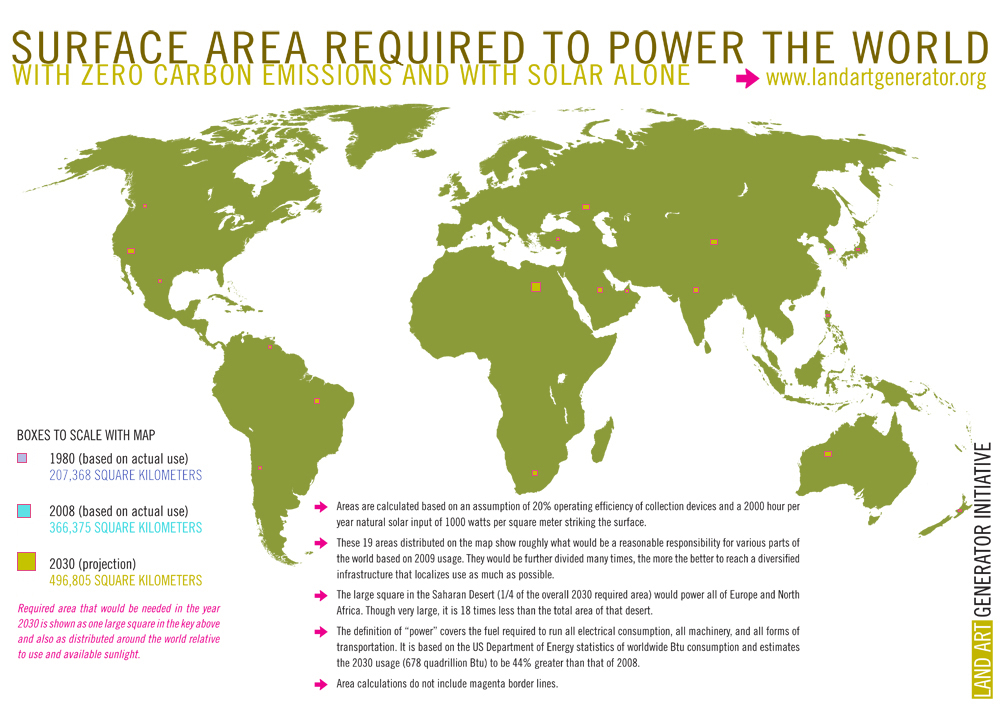
https://landartgenerator.org/blagi/wp-content/uploads/2009/0...
Back in the 2000s there was a ton of discourse around peak oil. As part of that, I recall reading very detailed breakdowns written by actual engineers and scientists arguing why you would never have a mass-market EV with the range of a gasoline car and you would never be able to power more than 10-20% of a modern economy with solar power. I own two EVs, one with gas-comparable range, and California currently gets almost 40% of its total electricity (averaged across day and night) from solar, and climbing. There were whole books on this. I think one was called Power Down. It was all 100% wrong.
I also recall reading detailed analyses by aerospace engineers about how you would never have a reusable rocket, that it was simply impossible or would cost so much it wouldn't be practical. First stage reusability is now routine, and second stage reusability is coming.
Detailed breakdowns of why X is impossible have an incredibly poor track record unless they reduce directly to the laws of physics. Will faster than light travel ever be possible? No, and I believe that, because if it was it would mean a huge part of modern physics (not just relativity) is wrong in very bonkers ways.
There is no first principles physics argument for the limits this guy is arguing.
Of course if you imagine infinite growth on a finite planet, that fails. That's a trivial argument. But that's not happening, probably due to birth rates declining. The question I'm addressing is: can this civilization and its near-future extrapolation be powered without fossil fuels? The answer is yes, and again even without nukes. Throw nukes in there and it just gets easier.
IMO this is 100% ideology and is an example of what I call "problemism." A "problemist" is someone who uses a problem as a stalking horse for one and only one solution that turns out to smuggle in some kind of ideological or social agenda.
I see problemism as a dishonest propaganda technique. It's a way to sell the idea without directly selling the idea, instead using concern over some other thing to smuggle it in.
So you know I'm not just picking on the left: right now there's a big freak-out on the right about birth rates. The problemists there argue that it's why we need to get back to ultra-traditional family structures and take rights away from women. They're not interested in any solution that doesn't do that, because they don't actually care about the problem. They only care about taking rights from women.
This guy and those like him only care about degrowth as part of what is probably some kind of anti-industrial political ideology. If the problem could be solved without it, that would be bad as far as they're concerned, just like how the far right doesn't care about solutions to birth rate decline issues that don't involve reactionary social agendas.
Most of these people are anti-capitalists. Thing is, I don't mind that. I don't think capitalism is the ordained perfect system. But if you want to sell me on an alternative to capitalism, argue for it directly on its merits. The test is: if climate change and fossil fuel depletion did not exist, could you still make your argument for abandoning capitalism in favor of your system? If not, then you're engaging in "problemism" to sell bullshit. Because there is no physical reason that you could not drastically cut CO2 emissions without abandoning capitalism. A simple progressive carbon tax combined with cheap renewables could do it. We just lack the political will.
https://ec.europa.eu/eurostat/databrowser/view/road_go_ta_to...
In 2008, people and businesses were still buying new computers every year or two, printing everything on paper, buying physical media. I don't know anyone that does this anymore. I don't think that is a good proxy.
Good thing that's just degrowth propaganda.
> This economic system is extremely terrible at meeting base human needs.
Except in comparison to all others. Crop failures and famines were common in feudalisms. Planned socialism is known for food insecurity. The system today might not be best possible, but it's, by no means, terrible.
> This is an absurd strawman.
Need to read more degrowth fiction then.
> What degrowth advocates for is taking as our first priority meeting human needs and living sustainably (which can be made compatible with most of the technology we have today in some form)
The problem here is the "human needs" part, which are famously infinite.
> ...than the ideology of growth for growth's sake, which mainly results in massive amounts of wasted resources and funnelling wealth into the hands of a few.
Also degrowth propaganda. No one "grows" for the sake of "growing", lest they have a need for it. All choosing actors act towards fulfilling their needs, regardless of whether anyone find them "fundamental" or not.
Trivially false, and I think this is the root of it. I'm lazy so I asked Claude Fable, but what it gave me is in the same ballpark as a blog post on this I saw a while back that I now can't find.
Question: "Lets say a billionaire spends 100% of their time on boards a medium sized private jet. They also own three 10,000 square foot homes, all of which are heated and cooled 24/7. How much energy do they use? What is that energy use in terms of average European households?"
I used European because Americans are notable energy pigs and can cut a lot without losing much. Europeans are closer to the reasonable baseline.
The total it comes up with for our gas-guzzling fat cat is 96-97 GWh per year. That's including three homes and a continuously operating jet aircraft. This is a totally ridiculous footprint, of course.
Claude Fable says the average European household uses about 15,000 kWh/year in electricity, heating, etc. That means our fat cat corresponds to about 6,400 average European households.
The population of Europe is around 750 million people.
There's about 3000 billionaires worldwide, and if they all lived as absurdly as my caricature they'd use 288 TWh per year.
That corresponds to around 19.2 million European households, or about 2.5% of the energy use of a middle class Europe.
The vast bulk of energy and resource use supports the middle class, and raising people out of poverty.
Inequality probably reduces energy use. If we improved equality it would mean more people with a basic middle class standard of living. A society in which almost everyone has a European middle class standard of living would consume far more energy than one in which a few fat cats live it up and everyone else is poor.
Personally I agree with the left at least a bit on this. I think we have too much inequality. If we reduce inequality, that will increase energy consumption, so we'd better build solar panels and batteries and reactors at the same time.
(There might be one exception to that: reducing warfare. War is a gigantic waste twice over: tons of energy to fight, tons of energy to rebuild all the stuff we break. But I doubt eliminating warfare would be enough alone to cut emissions enough to matter.)
There's only two ways to reduce CO2 emissions by a large amount in a durable lasting way:
1. Replace CO2 emitting sources of power with those that don't emit CO2.
2. Destroy the middle class.
Actually I guess there's a third: kill a lot of people.
Anything less is a rounding error that won't make much of a difference.
I'll take option 1. Luckily the laws of physics say we can do it. We just need the political will. There's also precedent. Many developed countries' emissions per capita has been falling while growth has actually continued (in most cases) and standard of living hasn't moved much. We just need to do a lot more of what works.
> Globally, the top 10% of emitters were responsible for almost half of global energy-related CO2 emissions in 2021, compared with a mere 0.2% for the bottom 10%.
The top 10% is quite a bit more than billionaires, it's true. But you are also assuming that reducing emissions must come with a reduction in lifestyle, which is untrue. Think about the way that our computers are designed to be disposable and unrepairable, or how clothing is made worse and worse (because it's more profitable, which is only necessary because of the need for infinite growth). Or, as you pointed out, North Americans use a ton of energy for terrible reasons, and fixing that problem would improve their quality of life: walkability, bikability, and public transit so people can drive less (or even stop owning a car) while also getting improved health; replacing flights with more comfortable high speed trains; removing the need to maintain a lawn for every house (shockingly terrible for the environment); etc. Or how we ship things all around the world to be assembled in different phases in different countries because it's cheaper (and suppresses labour). What so many of the things we need to do to solve this problem have in common isn't a reduction in lifestyle (some will do the opposite!), but rather that they impact profits and therefore threaten infinite growth.
Yes, there are some things that people won't like doing, like significantly reducing the amount of meat they eat (>15% of global emissions are from meat production, and it is the primary driver of deforestation in the Amazon). But pretending nothing will ever change doesn't solve the problem (and we'll be catastrophically forced to change later if we don't voluntarily do it sooner).
Environmentalists have been making the "abstinence first" guilt trip argument for decades and it's done absolutely nothing and it will never do anything. That approach is a total failure. I use the abstinence framing because it's like abstinence-based sex ed. Instead of having sex, teenagers have guilty sex.
Let's say Claude's wrong. The argument still stands if it's off by 10X. Soaking the rich won't help by more than a rounding error, and redistribution might actually increase resource use. It's also a one-time thing.
Speaking of AI: turning off all the AI data centers won't help either. They're a few percent of electricity use. A few percent won't matter and it's another one-time thing. It's not an ongoing solution to anything if the economy is still powered by burning stuff.
Then you have the developing world. Let's say we can cut energy requirements to live a middle class life style to 1/4 the current level, which might be possible.
There are about 1.4 billion people in Africa who mostly live below that level. We have no right to tell them they can't have what we have. There's also probably a billion more in Asia who are still climbing to middle class.
If Africa modernizes on coal like China did, that'll add another China worth of emissions, which would be catastrophic. The only way out is for Africa to industrialize and modernize on sources of power that don't emit CO2.
Luckily that's possible, but telling them to stay poor isn't how you make that happen. It's how you get them to say "fuck you" and ignore you.
The top 10% is overwhelmingly not billionaires, or even millionaires. The top 10% is basically all of the US except the poorest. And some upper middle classes elsewhere.
See “stability” section
I dont know
https://www.drought.gov/states/new-york
Overall the state is 2.56" above normal for precipitation in 2026. Tompkins County is 4.3" above normal.
It sounds drastic, but all I keep hearing is that we need drastic actions, but those drastic actions seem to always be based on diffuse, abstract, and really rather meaningless and insignificant things like reducing energy use, while at the same time driving tens of millions of more people from low energy consumption regions into relatively high energy consumption regions.
But to address your point too, yes, Europe seems too be shifting into a different climate, but it's because based on my theory, Europe has effectively drained it's water cycle of the very moisture it needs. Sure, climate change has warmed things everywhere, but don't you think if Europe had the moisture it drained into the oceans that could evaporate under the higher heat into clouds that both would provide ray reflection/shadow/cooling, and deposit rain into the alps in the form of snow in winter; things would likely look a lot different?
The thing is that the source does not have to be gone, because it is actually not in Europe at all, but you have to kind of "kickstart" the cycle again if that is even possible. The source of European moisture in the European water cycle is effectively the USA and the Gulf of Mexico, Caribbean area. The Gulf Stream then drives that moisture by way of the energy in the water towards Europe, where it then is driven inland from the north through the cooling at the poles.
What I am saying is effectively, if you drain your lawn with elaborate drainage systems that suck all the moisture out at a faster rate than you can even water it, you should not be surprised that it still will dry up and die.
There are clearly things going on, e.g., the US has not really had anywhere near the number of hurricanes that keep getting predicted, but I can assure you that the heat is generating a lot of storms and clouds. It's a bit anecdotal, but I am actually oddly surprised at how "cool" the ocean water is this year in particular compared to the past. I hope it's not the other wild prediction scientist have made that he AMOC seizes up and you guys end up wishing there were more global warming, but that's for another day.
May you live in interesting times
It's really not all that complicated when you realize what I am saying and it just seems to proximal for Europeans for some reason, i.e., they don't really seem to have a sense for how things were in the past, based on my experience talking to them, i.e., they think the rivers they have have always been more or less the way they currently are even if they are maybe manicured with banks or something. For additional context; the Rhein was up to 30 times wider than it is today before being straightened.
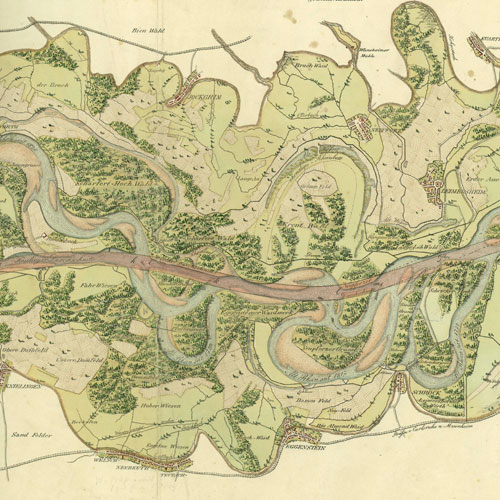
Here's a decent illustration of that [1] which shows not only how the river was straightened from the meandering oxbow river into the straight red river, but also notice that all of the green area is the historical path of the river and the flood plains it produced which would have been fed by all those meandering oxbows. All of that is now gone with the drainage of Europe having been completed over about 200 years now.
It's really not all that different in the USA either in case you were wondering, but e.g., the Mississippi has only been straightened since the 1930s and is still very much not really fully controlled even though the straightening along with deforestation and soil erosion has also led to the USA being essentially drained. And here too, people are wondering why it's getting dryer more. We have similarly also chocked our country full of way more people that can sustainably be supported in an ecologically sound manner, but liberals and conservatives have one thing in common, they slap the roof of the car and proclaim "this bad boy can fit so many f--king people in it." out of a toxic combination of lust for power, decadence, entitlement, and greed.
[1] https://eucorkarten.ub.uni-freiburg.de/wp-content/uploads/20...
Swiss Tourism Agency will have to work overtime now promoting Tiktok clips and Insta reels, because of Rösti's stupid policy. And the country is going to pay for it over the next few decades.
It's going to be a huge future fight in the EU because all countries upstream will want to retain 'all' the water and the remaining low flow will still have all those countries their industries dumping toxic waste, meaning the ratio of water-waste will get ridiculous.
It has only a single waterlock and so there is no retention of the water in it when a period of draughts like the ones this summer happen.
Germany has had a project for adding water locks to the Rhine ongoing in burocracy purgatory for the last 26 years now, and if this situation doesn't shake things up I don't think anything ever will.
There is still enough water, it is just unevenly distributed over the year. Previously winter snow was retained in the Alps and released as it melted during the summer, nowadays winter rain immediately comes downstream as giant floods.
If upstream countries were able to retain a significant portion of those floods and release it as a trickle during the summer, The Netherlands wouldn't have any problems. It is literally impossible for it to be worse than it currently is.
Besides, most of the water used in The Netherlands does not come from the large rivers, but from local rainfall. The drought is due to sticking to the historical policy of trying to immediately get rid of any excess water, rather than retaining it locally. No need to do anything EU-wide to solve that, just get the farmers to accept that the land will be a bit soggy in the winter.
Rather than exporting farming products, The Netherlands should focus on exporting farming practices.
But yes, the intensity and especially the duration of the heat has intensified. I stopped visiting my family in the south of Europe around five years ago, and visit in either fall or spring. Can't really take the heat, it's not worth it.
The cities will have to refactor themselves to avoid becoming ovens.
The population didn't choose for convenience. The billionaires chose for additional profit.
Portugal is heavily dependent on tourism: it's 10% of the GDP. In the EU not even France is that high: Spain is higher but Portugal's economy definitely depends on tourism.
When stats says: "10% is tourism, 40% is services", if you remove the 10% linked to tourism, the services economy does crash too. And so does the 20% that is "construction": a part of that is second effects from tourism.
You can't just say: "We'll just remove 10% of our GDP and we'll be fine". Firstly even at "only" 10% you'd be totally screwed and then anyway the actual number would be much higher.
https://www.bts.gov/us-tonne-kilometers-freight
(a bit easier in table form as the graph does not aggregate accross all means of transport).
Here in Washington State, a decade ago we had an initiative (I-732) to do a carbon tax and lower regressive taxes (we have one of the most-regressive tax structure in the USA). The environmental groups opposed it because it wasn't handing out money to them and it lost narrowly.
Eventually the legislature passed a complicated cap-and-trade scheme and they spend the money on bullshit and lie about it: "The projects the department touted amounted to just under 4% of their original estimates." https://phys.org/news/2026-01-washington-state-overestimates...
But energy source isn't the only problem. The problem is partially that energy use is high in and of itself. Solar panels (which only generate electricity; energy use is much bigger than just electricity) require materials like cobalt, which is mined (partially using child slavery) in Africa (DRC) in ecologically devastating ways (since you clearly care so deeply, I'm sure you knew that already). The ideology of infinite growth requires ever more cobalt, and so it depends on that oppression and ecological damage. Reduce, reuse, recycle are in that order for a reason, but we are never able to do the first because of infinite growth.
I think your framing of "abstinence" is nonsense. What are we abstaining from? Economic 'growth'? Energy usage? Consumerism? If so, all we're "abstaining" from is the thing that benefits rich people to our own detriment. We must distinguish economic growth from improvements to lifestyle, which as I stated are frequently at odds.
> They're a few percent of electricity use.
Continually growing, using far more resources than just electricity, for mostly downsides to humanity, and causing significant local pollution.
> Let's say we can cut energy requirements to live a middle class life style to 1/4 the current level, which might be possible.
Sure, let's just make up numbers. Sorry, I meant let's burn methane to have 'Claude' make up numbers.
> There are about 1.4 billion people in Africa who mostly live below that level. We have no right to tell them they can't have what we have. There's also probably a billion more in Asia who are still climbing to middle class.
But you haven't dealt with the fact that the reason they're deprived is because of the very system you're supporting. I agree that all people ought to have the same access to technology and standards of living, and doing so requires that we reshape how technology works and is distributed. That will never happen under the current system, because doing so would impact profits. Infinite growth is the thing preventing us from fundamentally improving our technology and societies to be sustainable.
> telling them to stay poor isn't how you make that happen
I am arguing for the opposite, but you seem not to have read what I wrote.
Cobalt isn't used in solar panels.
Aren't we already doing that?
What tax number do you have in mind for "effective"?
$100 per ton or maybe $200 per ton would have massive differences on industry but wouldn't prevent modern convenience at all.
But the two biggest points would be that every power plant and tons of factories stop emitting CO2, and the cost of vehicles shifts significantly in favor of electric.
I wrote a comment here, you can of course fact check all I said and investigate more:
Please read the classic book by Edward Tenner: Why Things Bite Back. Technology and the Revenge of Unintended Consequences, 1996 (oldie but goldie and must read for people who think technical solutions have no unintended (and irrevocable) consequences Mike eucalyptus trees in California, or the https://en.wikipedia.org/wiki/Cane_toad in Australia, among others.
Well, no, we have to do something that will help. Doing something that makes things worse isn't the answer, and the worse things are, the less we can afford to do so.
"This might help, but also might really mess things up" is not the answer - not in politics, not in economics, and not in climate change.
But I agree with one part of your post. Persuading nations to become poorer voluntarily is not a viable strategy.
Oil is a drug for the world’s economies. If you remove it, the economy plummets with billions of starving people because everything is grown, produced or transported using fossil fuels
> If you remove it, the economy plummets with billions of starving people
Sounds like quite a sacrifice to me.
Framing it as such is doing propaganda's work.
Also, if it weren’t so profitable.
Don’t even think through what you say remotely before you say it?
So... I had a look at Eureka CA weather this morning. Looks like Western Norway. Nice. Spending July and August up there might be mandatory for our mental health.
We spent 3 years in Tempe back in the '80s. It sucked then too.
As a Portlander I treasure our 3-4 months of sunny weather. I wouldn't be able to handle the year-round gloom.
But it's our consumption and expectations that feed into it.
https://www.dpg-physik.de/veroeffentlichungen/publikationen/...
Comparing sample rates during the spike to sample rates for the rest of the graph? Hidden inside those sample rates can be dramatic changes (some of which we know if that ARE NOT IN THIS GRAPH) for example the little ice age and the volcanic warming periods of europe as recently as the last 1000 years which dramatically changed the climate.
Im not arguing against human-climate change, I'm arguing that this type of junk science does no one any favors.
It's called the Permian Extinction, and eliminated around 90% of all life on earth.
It has worked for 100 years in epilepsy. I dont see why it has to stop working.
2. You can live really well by only eating red meat (& fat). Think eating lamb everyday.
3. It is cheap enough. Some type of wild fish might be better but fish is expensive.
4. It can help diabetes & mental illnesses (IMO biggest healthcare costs).
5. You need to eat low carb & high fat for most of the benefits though.
You need to eat the fat, the fat is actually more important, you need a ratio of 2-1 (2 grams of fat for every gram of protein+carb) for mental issues.
1. Between them, diabetes is very easy. It should heal T2D, and make T1D glucose more stable so you need less insulin. When you've been T2D for more than 7 years becomes harder, might need more time or it's more complex. See https://www.virtahealth.com/ for diabetes
2. Epilepsy depends on what type you have, can fully heal or not work at all, because they have different mechanisms. Has been working for 100 years. https://charliefoundation.org/ for epilepsy
3. Mental issues the same as epilepsy, might work like a miracle, might not work at all, and everything in the middle, depending on the issue & root of the problem. Works surprisingly well in Bipolar Mania. https://www.metabolicmind.org/ for mental issues
This is a nice documentary that covers all cases above ^ including rising complications: Cholesterol Code Movie for complex topics/cases https://www.youtube.com/watch?v=57Z8bUb1P94.
Complications that arise in the documentary above ^ are a bit rare in general population.
1. a single cow produces 250 grams of methane per day. Methane is insanely more dangerous to the environment than CO2. A single adult cow pollutes in a day as much as a car driven for 165 miles. And that's only for emissions.
2. As a cow does not pollute just what it emits, you need to add the lifecycle: cows need to be fed. 80% of the food we humans grow goes to feed animals, not humans. Beef gets the lion share. So we consumes insane amounts of money, fertilizers, gas, just to feed cows, that pollute like crazy anyway. The amount of water cattle consume (from drinking to the one needed to grow food) is also extreme.
3. Cows produce a lot of waste, that ends up in rivers. Along fertilizers (mostly used to grow food for cattle anyway), it pollutes so much that waters around souther US are essentially dead.
4. By mass, beef alone, outmatches every single land animal on this planet, combined. You could put on a scale every single tiger, domestic dog, rabbit, squirrel, horse, hyppo, kangaroo, etc, etc, etc on the planet. They would weight less than the cows we grow.
4. Red meat is a category 1 carcinogenic. You should eat it rarely. I don't know where you get your nutritional facts, maybe from Joe Rogan?
In essence, you demonstrate fully my point: we humans don't want to know really what our impact on the planet is, and we're happily distracted into the "just buy an electric SUV" trolling.
Local changes due to global warming are even more significant than the global average shows, for example the arctic has, on average, warmed more than 3 times as much as the global average.
This chart shows direct measurements where available (generally like 1800 to present), our best estimates for earlier temperatures, and expected future temperatures based on what we've seen so far.
Here is Google's AI description of DPG: > the German Physical Society (Deutsche Physikalische Gesellschaft, or DPG) is held in exceptionally high regard and is recognized globally as one of the most prestigious scientific organizations in the world
That's the organization whose work you refer to as "junk science".
Do you not even track what conversation context you're in before going off?
edit: im editing here to respond to the absurd response below. The reponder, while lecturing rabidly missed several things like the difference between aridification and heat, local vs global, and europe not being the world.
I want to point out that its poeple exactly like this poster who ruin global warming debates with demonstratably false, confused, or foolish comments. Is polution bad and causing warming, yes most likely. Has the commentor below proven that? no. And in fact repeated danced around proving it while insulting me. This person is not the ally you need.
Also I forgot to address this point in your earlier comment:
> As someone who hope global warming is man-made becuase that woudl be FIXABLE at least in theory
The fact that I am able to shoot you in the face does not imply that I am able to fix you afterwards. We are in no way capable of removing all the carbon we have added to the atmosphere within a reasonable timeframe, it would probably take about a thousand to a few thousand years if we really went for it.
And as I've shown you with the graph, global warming is indisputably, without a doubt, anthropogenic which means man-made.
Arguing about whether this heat wave is related to the severe global warming we are currently is experiencing is absolutely asinine, there is literally not a single fucking thing about the climate on our planet right now that wouldn't be different without climate change. The heat wave in Europe would be less hot, and/or it would be shorter, or it wouldn't be here at all. The general severe warming Europe has seen over the past decade would not have occurred.
It is not. There are no studies with simply meat. They count burgers and processed stuff. I literally do 90% carnivore so eat nothing processed. I only put salt on the meat.
> You could put on a scale every single tiger, domestic dog, rabbit, squirrel, horse, hyppo, kangaroo, etc, etc, etc on the planet.
Carnivore animals rarely are eaten. Horse/rabbit are low fat. Beef & lamb are the two most popular that are available nearly everywhere.
> I don't know where you get your nutritional facts
The best diet for mental health is animal based keto diet and carnivore diet (only red meat actually!, maybe some fish which is even more expensive often)
The diet is used for kids/adults with refractory epilepsy & serious mental disorders like schizophrenia/bipolar/eating disorders, diabetes (it's easy actually but there are many potential people for this).
--------
A short example: The only way to do vegan keto diet for epilepsy/schizophrenia/bipolar, is to eat protein powder, because there is no non-processed vegan food that has protein and is low carb.
> They count burgers
Do you think grinding up a piece of cow changes whether it's carcinogenic?
The focus of the discussion is topic is how dangerous is cattle farming to the planet. The answer is very, I gave you numbers, you're free to debunk them.
The topic of whether red meat is category 1 or 2 carcinogenic is less of an interest to this thread.
If you want to keep your diet, keep it, it doesn't change it has an insane impact on the planet in terms of greenhouse gases production and resource consumption. It kills the planet, whether you like it or not. It's unsustainable.
Do you have a source for this? Everything I can find shows less than half that.
> By mass, beef alone, outmatches every single land animal on this planet, combined
This is most probably false. To start you are repeating a claim that you didn't really understood. One problem is that you are confusing animals with mammals. Other is that you are confusing animals with vertebrates. In fact, we really don't have decent data on most invertebrates, and almost no reliable data in many vertebrates.
> Cows produce a lot of waste, that ends up in rivers
In the real life, most people use this on fields and agriculture, as crop fertilizers.
And the point 2 is missing a couple basic rules of ecology.
1) Big animals use energy more efficiently than small animals on the same category and,
2) Herbivores suffer a lot of pressure to feed themselves accurately. We can't just eat enough zucchini to replace beef, because we can't digest cellulose, because our small gut is not well adapted to this, and because most vegetables are basically water. The day is just too short.
But in burgers you get bread, potatoes, seed oils, etc, which are all bad.
Example: its extremely hard & rare to become or remain fat in keto/carnivore.
Vegetables contain non-heme iron (Fe 3+), which is reduced to (Fe 2+) by the body on demand for absorption. In contrast, heme iron is already in its reduced state (Fe 2+). Because of its high bioavailability excess heme iron reacts with peroxides to produce highly reactive free radicals (Fenton reaction).
You can keep on potatoes safely.
It just doesn't seem to make sense to me. How can any mammal capture more carbon than they release?
There is no way around it.
At least I eat healthy compared to you (easily verifiable when you have a health issue like epilepsy or diabetes).
Which is fine. But it's not nice to tax other people's medicine.
On keto/carnivore I see immediate results (weeks) that span over multiple years.
> The Carnivore Diet may offer short-term health benefits but carries substantial risks of nutrient deficiencies, reduced intake of health-promoting phytochemicals, and the development of cardiovascular disease. At this time, long-term adherence to a CD cannot be recommended.
https://pmc.ncbi.nlm.nih.gov/articles/PMC12845189
2. On the contrary, the mediterranean diet is one of the most studied and backed with more evidence behind its long term health benefits.
3. In any case the topic is climate change, which agriculture and cattle are very strongly responsible for as cattle farming produces both lots of greenhouses as well as being very resource intensive.
Which is fine. But don't pretend it to be otherwise with your social media diet.
> https://pmc.ncbi.nlm.nih.gov/articles/PMC12845189
Again, it's very hard to form correct opinions when you're not in the trenches and just read stuff online.
A (complex) example: are bad blood lipids actually bad when you're very fit? This is being researched, might take some years. It's a complex topic, see "lean mass hyper responder" or "The cholesterol code" documentary https://www.youtube.com/watch?v=57Z8bUb1P94 . (this is the cardiovascular angle)
> 2. On the contrary, the mediterranean diet is one of the most studied and backed with more evidence behind its long term health benefits.
Yet it doesn't work in any of the scenarios I said.
It's not a bad diet, but it's a random diet IMO, no thought went into it, or some evolutionary design (I live in a mediterranean country and ate it by default).
ps: the mediterranean should work on type 2 diabetes. But what happens if eating even some plain/simple/good carbs/sweets/fruits still triggers your brain so high-carb food remains an addiction in your head? The only solution might be to quit even the "good" carbs, so after some time, you have no triggers/urges for bad food and can live in peace.
What should be taxed is high carb, sweets, ultra processed.
As I posted you a comprehensive review of carnivore diet literature there's no evidence of any long term benefit, in fact, there's evidence of the contrary.
You really sound like somebody who takes advice from Joe Rogan and Tik tok instead of going to a doctor.
Continue believing the narratives and data that back your preferences or your anecdotal experience I guess.
While carnivore is eating only meat.
Your paper just said that you may have issues with blood lipids and stuff, there's no real measurements if those blood levels end up as real issues.
Example:
> In contrast, a systematic review by Palmer (2025) [12] concluded that the long-term adverse effects of red and processed meat consumption—such as increased risks of type 2 diabetes, cancer, obesity, hypertension, inflammation, and atherosclerosis—clearly outweigh any potential benefits [12].
Putting diabetes & obesity in there is literally insane! One big issue on carnivore or keto is it's very hard to gain weight, because protein & fat are very fulfilling.
The whole study is always "eating more meat might do this", and never considering real carnivore where you eat nothing else. And even on cases on carnivore, most of the things were extrapolating from the transitory period (hint: staying 30 years carnivore and transitioning to mediterrean also has issues)
Again, it's very hard when you know no details whatsoever.
This is a mongodb moment for you my man (going by marketing), but it's ok, you just don't know better, and don't have the tools or time or ability or the necessity! to try anything else.