Google Glass is Ridiculous(nickfranc.is) |
Google Glass is Ridiculous(nickfranc.is) |
As I Tweeted a couple of days ago, it's the Bluetooth headset times a billion. Something that might be legitimately useful to a small percentage of the population, but wearing it in public makes you look like a tool.
But the op comes across as very harsh against a product that he hasnt tested and at most has been used by very few people. I think it may generally be bash against the hype of the product rather than anything it offers.
If you don't like it, don't buy it. This article is ridiculous.
Wow. This line should be on the top of the article (not bottom).
Of course. But -- envision a Kinnect-like motion sensor on the front. Watching your hands.
Screen privacy is a big win, for me. Not want "so, whatcha doing?" snoops.
Just imagine the conversation starting with we do our company staff meetings daily using Hangouts on Glass, and everybody is expected to join...
Some folks said the same thing about the iPad. Who needs a tablet when I've got a laptop and a smartphone?
What strikes me is that this person is lambasting a product that he hasn't tried first hand. He hasn't lived with it for a week to see how it benefits or hinders his life. It's fine if you don't want one (I don't have a smartphone by choice), but realize that just because you don't want the latest new fangled gadget doesn't mean that it won't have mass market appeal.
"Puke. I find Glass to be ugly, impractical and completely ridiculous."
And I find Glass to be elegant, useful, and futuristic. So where does that leave us?
And then this:
"they simply don't know what it means to make products that make people happy."
Are you serious?
Wait, bulky cell phones did not catch on. Cell phones became ubiquitous once they became practical. Go back in time and introduce a modern cell phone (assume the infrastructure to support it) and it would be a huge success.
Maybe the next incarnation of enhanced reality will be huge, but the argument is that this incarnation will not.
Also did the bulky ones not catch on because they were bulky, or because they were expensive or ...?
So I think we ought to welcome channels of criticism/contemplation rather than just continuing the cycle mindlessly. I get that he hasn't used the product, but at the same time I get where he's coming from. Just because we can do something doesn't mean we necessarily should. It's a worthwhile thought whether or not you agree with his particular criticisms.
Or maybe technology (better bandwidth, front facing cameras in laptops & mobile devices) just caught up with our realization that the concept is more useful when one or both parties are not at their desks or at home.
that's a strawman. The primary claim is that Google's implementation is lame.
The primary claim in not that 'Glass-type' hardware is lame.
I can see your point about how he's attempting to argue the implementation is lame, but its also easy to construe his argument as 'glass-type' hardware is lame. This is an issue with the authors presentation, not with the OPs argument.
Like many over-positive posts though this seems overly-negative. I don't get how someone can have such strong opinions about something they haven't touched or used.
The biggest challenge I see for Glass is practical uses. If I am walking down a country lane does Glass do anything? It would be cool to be able to look at a tree and say "whats this?" and it is identified. Similarly being prompted at a fork. "Left will take you past a waterfall. Right will keep you in the forest"
Realistically though I don't expect any functionality like this will exist outside the city, at least to begin with. Best sellers are practical products for practical people. I am not completely sold this is anything more than a niche item at the moment.
Similarly, even the demo video shows driving directions and both Google and others provide hiking trail, cycling directions (even offline ones, which you might need in such circumstances).
Personally, I'm interested because I'm a cyclist. I think they'll be in the front lines with anyone else who needs their hands free once the price comes down.
And, I can count the number of people I knew with those early, bulky cell phones on my fingers and toes. It wasn't until the smaller, cheaper cell phones of the 90s that everybody had one.
Will Google Glass lead to something useful? Perhaps. But, will it be a game-changer today? I doubt it.
And he's correct about speech interfaces. So far, all of the readily available consumer versions are horrible.
Why think that was about the size and not more about the price? Every kid I knew who watched Saved by the Bell wanted a mobile phone, they just weren't in the "get it for Xmas or birthday" price range.
Most insightful: "Can you imagine having a conversation with someone that's wearing this thing? I'd feel like they aren't even paying attention."
I already detest people wearing bluetooth headsets. They give off the wrong social cues, they were never really accepted as fashion, and other than government-mandated hands-free use in cars, they appear to be dropping out of popularity (thank god). How is Glass any different, on a social interaction level? How is it any better? How does it solve the problems that bluetooth headsets had? It doesn't. It just requires you to talk to the aether even more.
Which brings us to the other insightful quote: "I can only imagine my morning commute on the bus, with 15 different people talking to the screen on their head just trying to check email." If they don't solve this, that could be a real problem. If anyone using one of these things has even a moment of self-awareness they wouldn't be able to stop laughing.
This is a really prescient article. It brings up exactly the right UI points, and the right problems. These are problems that Google should have started with, because that's how you design good human interactions. Instead they put a computer on glasses with a HUD screen and are screaming "LOOK ISN'T IT COOL" everywhere.
No, it's not. It's not human. And the reason is common among all Google products, to the extent it's almost pathological in the company: they are engineers first. They really aren't set up for human-focused design. It's just not in their DNA.
Do they make cool stuff? Of course. But none of them fit together in the right ways. They always seem to be using rivets when they should have been sculpting from clay.
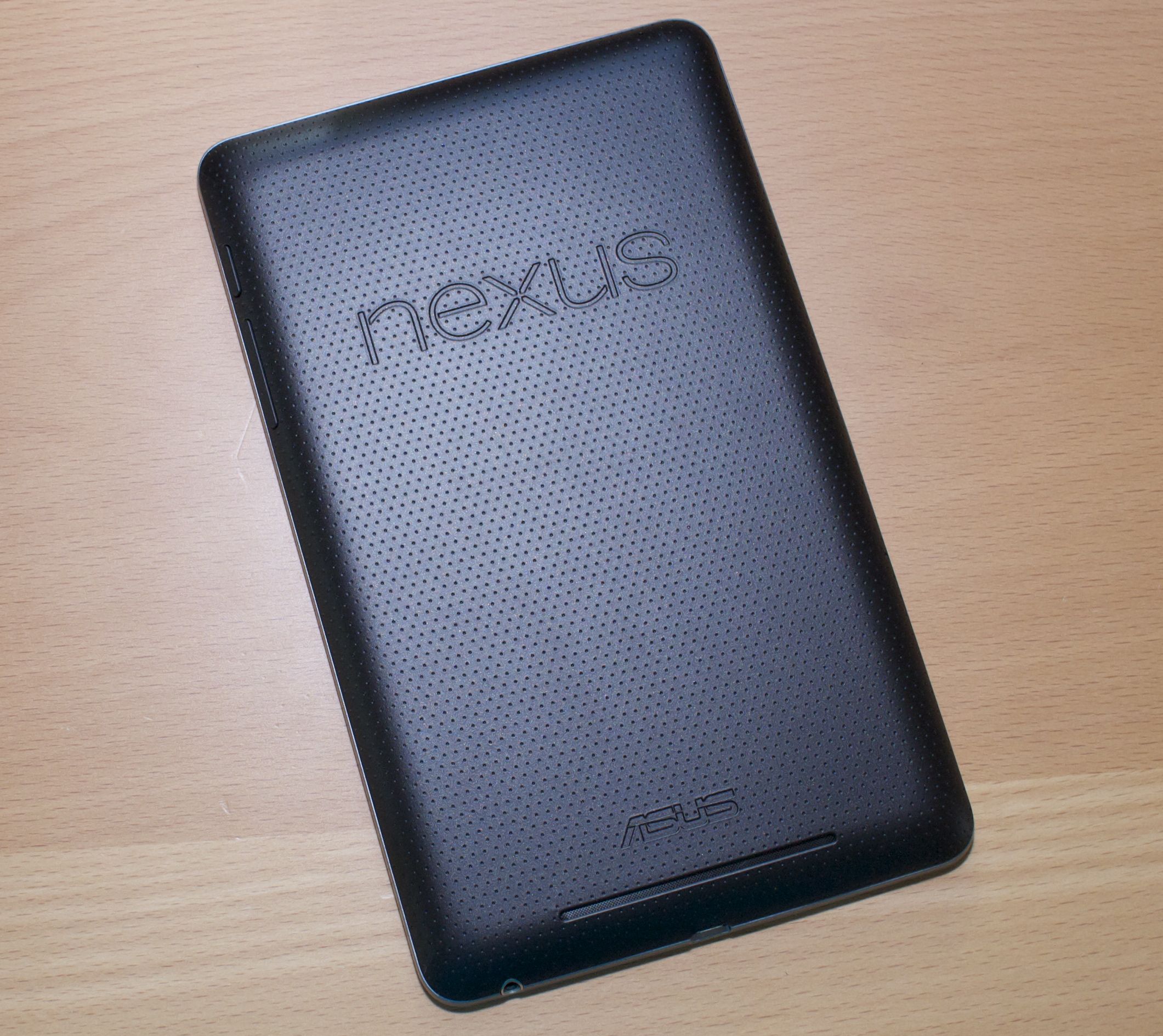
Nexus 7 sale estimates are 4.6 million. Fine, so they haven't ousted Apple yet, but it's by no means a "complete failure". I like mine :)
That seems to be the only "argument" in the article. The others seem to be arguments from personal incredulity.
http://news.yahoo.com/nexus-7-sales-soared-2012-still-fell-s...
http://rationalwiki.org/wiki/Argument_from_incredulity#Perso...
> Puke. I find Glass to be ugly, impractical and completely ridiculous.
It's pretty good for a first version. Get used to it, of course nothing looked like this before
> Let's look at the facts. Google has never had a successful product that people pay for
Never say never (again, remember Apple). Also, who says Google is in it for the money (from the sold device) ?
Not to mention that he clearly didn't read the article that closely if he thinks that the only way to interact with Glass is to talk to it.
I think Google has excellent engineers, and very poor self-restraint. This product is at least 2 generations away from what it needs to be, but instead of working on it in the labs quietly and diligently until its ready, they trot it out proudly. Beta obsessed indeed.
They're a tool used by people who favor function over form. I have never met anyone yet who has a coherent argument against them that doesn't boil down to "I am jealous and must try to change the world to believe that those people deserve mockery". It is a rather sad form of bullying.
And for what it's worth, I don't and have never used a bluetooth headset simply because I don't like talking on the phone. But if I did talk on the phone a lot, I wouldn't be so desperately concerned what random nobodies think about it.
I stopped reading after that sentence.
"If you have a phone in your pocket, why wear this? And it doesn’t seem to replace the need to carry a phone."
Here are the arguments Tog makes for an "iWatch": http://asktog.com/atc/apple-iwatch/
His point is that the media are falling all over themselves to praise Google Glass and there is no journalistic skepticism whatsoever. Indeed, many in this thread have no issue with that because they like the technology.
The issues he raises with Glass are reasonable points for non-engineers. (Engineers put up with more than average people do.) The most pressing concern for most consumers will be, simply: "Do I feel stupid using this in public?" I feel stupid using Siri in public. If that were the main product it would have flopped. I feel stupid using my Bluetooth headset in public, and wouldn't own one if it weren't illegal to talk and drive without one. That's not to say that it doesn't have value, just that social pressure is a powerful force.
I do think the media will turn on Glass once it's released. There's nothing they like more than setting something up for a fall. I'm not saying anyone in the press consciously does this; it's just what happens when unmoderated enthusiasm meets reality.
"They are competing to see who can do the most over-the-top, overwhelmingly positive review, in hopes of making people at Google happy"
I ride a motorcycle. Having a HUD for navigation, weather alerts, and phone notifications would be awesome and make my life so much easier.
I'm terrible with names. If Glass could do facial recognition of people I've met and tell me who they are it would greatly improve my interactions.
Using it to augment lifting weights would be sweet. It could time my sets and cooldowns so I get a better workout. Doing so with a phone or a watch is much harder and you can't actively look at them.
This list is just a start. I'm sure I could come up with plenty of other uses.
I do agree with the author that Google Glass is a ridiculous consumer product. I wouldn't want to spend time with someone who wore them in a social setting, such as a bar or restaurant.
You mean like someone with, well, glasses?
http://www.theverge.com/2013/2/23/4022040/google-glass-and-t...
Pretty sure people pay for AdWords.
First, I explained it with "the author means a hardware product", but then he immediately said that Apps where almost a product that people pay for. So, uh, I guess the ad network just doesn't count, since it's "only ads", or something.
It seems to work fantastically well though, both practically and of course economically for Google, and of course it must be seen as being a product at his point.
So, I guess at the end it's just a rant. :)
Except the one DHL broke on the way, of course...
Google has never made anything that this guy and his friends, have paid for, therefore failure.
But I do not believe in voice recognition technology as a primary use case. I don't use it when it's available, and even the people I know who advocate its use only, and I mean ONLY, ever use it when they're 100% alone. So that's my 2 cents.
"Reception of the Nexus 4 has been very positive overall. Reviewers were consistently impressed with the Nexus 4's affordable price and impressive specifications."
...
"On the day of release, the entire Nexus 4 stock on the Play Store sold out in under 30 minutes."
source: http://en.wikipedia.org/wiki/Nexus_4
To me it seems that in fact Google does make stuff that people actually pay for.
Also Google glass is a prototype, the author is basically speculating about it's future without any insight, he has no way of knowing what will happen to Google Glass, unless he has a time machine or a crystal ball, sure the current Glass is not trendy but the next version may become a lot nicer and less geeky.
Well, that settles it then.
If only in the past we had examples of innovations that were previously considered impossible.
I've read that "the best camera is the one you have on you." If Glass is always on you, it will be the best camera you will likely ever own. All of those moments that last for just a few seconds are out of reach of even your ever-present cell-phone.
Here, try this - click here:
Once you click there, try to take a picture with your cell phone as quickly as you can, and then stop the timer.
I hope you didn't cheat - if your phone was in your pocket, you counted the time to get it out, if you have a PIN on your phone, you had to enter it.
I got about 11 seconds the first try, and 6 the second. Can you seriously not imagine that Glass would be better at capturing those random moments?
Im a terrible multitasker, and I think that using this (or any augmented reality device) may make me worse at everything. I may be a curmudgeon here, but my father was nearly killed by a texting driver. I wish people could just focus on doing one thing at a time, and google glass seems contrary to that aim.
"I'm deeply passionate about product, UX, customer experience and nearly any topic that involves startups"
Snakeoil salesman.
The rest of the article is easily predicted.
It's hard to make new kinds of products that a lot of people want.
Disruptive products (by the original definition) start out as something almost no one wants, and create new markets for themselves or die. And they aren't "disruptive" until they iterate features to take them into markets that are mainstream for their category.
Basically, they are more innovation than invention, more evolution than revolution.
Google glass is one of those products people get excited about from time to time that tries to jump right to the end game, skipping the evolutionary stages.
Often they are simply ahead of their time, for various reasons. Think tablets before the iPad, for example, or video chat phones decades before computers and mobile phones.
So without a killer app, Glass seems like one of those products that needs a LOT of real-world evolution and iteration before it could become at all mainstream.
Thus a strategy could be to make Glass appealing to developers to better optimize for the possibility of popular features or use cases to be found.
plonk
I hope the crowd here is old enough to remember what this means in newsgroups/irc ;-)
As neither of us have had any interaction with someone wearing Glass we are both hypothesising, yet I would suggest the number 1 goal was to allow maintaining eye contact when wearing it, and then there were probably some constraints that lead the rest of this initial version, which seems to have been managed.
Whether someone is attentive or not when using it is not the definition of a product. Also, you're entire post really just boils down to hand waving and saying it's all bad.
But it does greatly affect it. Even talking on the phone has this element of distraction to it—my dad notices this especially. If I start messing around on the computer in the middle of a phone conversation, he can tell immediately and starts asking me what I'm doing on the computer. Good conversation starter, but it didn't help that I was distracted in the first place.
What happens when I get a notification on my Glass when talking to someone in person? What if a text message comes up and I start reading it. What if a random restaurant notification comes up (an ad? Surely not!). There are any number of things this device adds to conversation, while you're holding eye contact. That eye contact becomes not only eye contact, but unknown eye contact. It becomes more disconnected, even in person.
What would you do if someone took out their phone and started reading their messages while you were trying to talk to them? How is that different from Glass? Can Glass tell when you're having a conversation? Maybe it can, but how do we know?
It complexifies conversation. Personally, I don't believe that will be socially accepted. But you're right, we don't know yet. A lot of this is speculation, and of course the device will be refined and the interactions will be honed as time goes on.
That just brings up another point: the product, its use, and how it fits into everyday life are not well defined. It's beginning from an experimental engineering standpoint. More on a fundamental design level, I think that origin has a lower likelihood of leading to the right type of product.
So, low-quality earbuds are the problem, here, right? I mean, you're talking about listening to other people talking softly on public transportation, and you say the conversation is the problem? Do you similarly hate people who use cellphones or talk with friends on the bus? Should every bus and train be all quiet car, all the time? :)
It's funny: I haven't seen a lot of objections to Glass based on how poorly it seems likely to work[1] (which, you know, I'm hopeful, but wearables haven't caught on, yet...). Instead, objections seem to focus on two aspects:
1. Oh, noes, people can snoop on me! Well, first, they already could, and second, there's literally nothing that can be done except to make sousveillance tech illegal, which will ensure that we only have surveillance.
2. Oh, noes, I can snoop on people! That's an objection that the article seems to be making, here. I have a solution: don't pay attention.
[1] Well, Nick says "impractical", but I didn't see any examples of that unless fashion faux pas are impractical.
Then yeah, I guess you're the kind of creep this product might appeal to.
Concerning your "snooping" point... it lowers the barrier to entry. Sure, people can always take a picture of you, but if they can do it in a discreet way, there's less incentive for them to have the common courtesy to ask.
Yes, I do hate them, and I thought the common perception was that everyone hates people that talk on the phone when using public transport.
They have somewhat. I still see a lot of people with those ridiculous bluetooth cyborg ear things.
"This needed to be said."
People are excited about this project not because of Google -- they're excited because it's a brand new form factor. It's something that is revolutionary and not just evolutionary. And yes, first generation products do tend to be ugly, slower, and have input problems as I'm sure Glass will. But this was also the case with the first mouse and GUI, the first touch screens, and the first multi-touch screens. They got better, and cheaper. Modern smartphones are incredibly polished after only 5 or 6 years of refinement (that is, from when this no-button multi-touch model took off). And you know what, society adapted to them just fine.
Granted, it would look incredibly stupid for the unknowing onlookers though.
Granted, there were those problems getting the initial batch of 4s out to the public, but that's hardly grounds to say a company is incapable of making customers happy, surely.
  | there were those problems getting the initial
  | batch of 4s out to the public
Google has never had a successful product that people pay for.
And then contradicts himself in the next sentence, saying that he pays for Google Docs. I switched my company to Google Docs Enterprise, and it has been pretty good so far, except for the trips behind the Great Firewall of China. It is definitely worth the money we pay, which really isn't much.
As for Google's hardware, the present generation is pretty good. If I didn't want a hardware keyboard so bad, I'd already have ordered a Nexus 4. I've got the N10, and aside from the occasional crash and video playback glitches, it has been pretty good too. I won't seriously consider a non-Android mobile device for my next purchase, unless it too has an open-source OS.
If they have a version of Glass which has some augmented reality capability, I'd definitely consider purchasing one too. I don't need much, but being able to overlay waypoints over my field of view while navigating would be awesome. I don't currently foresee me using the photo and video capture features much.
I started to extract and quote the parts of the article saying the problem is Google's implementation but it was close to being the entire article.
Reality is that our first impression of a new technology is pretty much a coolness measure. Some things look cool and everyone who sees it wants it but are not ultimately useful or impactful (eg segway). Its really hard to tell how important some new technology is.
I know different people have different usage patterns, but the Nexus 4 battery is far from "horrendous", especially when compared to other flagship devices.
So if you get a message notification on-screen you can read it and just think "back." Glass would interpret it as a swipe up on the touch or saying "back" by voice, and the message will be marked as read and the screen will turn off. I think voice commands are still very useful for what would be sequences like "Give me directions to the nearest Dunkin Donuts."
As I said earlier I'm not sure how much can be controlled via touch but that is a not a big problem to solve. Google shows off voice interactions because it is more cool.
Heck, keep the hotspot in a bag or make a wearable, unobtrusive hotspot belt or anklet, then the battery size & life can be increased while still having no gadgets in one's pockets. One could put a widrive on the belt/anklet too, so Glass becomes useful even without constant access to the cloud.
Are they look at me and smiling because they like me, or have they superimposed a cartoon on top of my face?
If the car has a TV screen directly in front of the driver, then the design of the car would certainly be at fault for driving without due care and attention. Is that really that controversial?
(for what its worth, Gruber backed the Pebble on Kickstarter: http://daringfireball.net/linked/2012/04/23/pebble-watch )
Both are wearable screens augmenting your phone, though the Glass has additional features, like voice commands and a camera
I want to be trying to remember what someone said to me while I was distracted by a road sign, and be able to pull up audio or video of that moment by reference to the distracting sign ("triangular blue sign") by doing a video search via voice input.
I want to have every moment of every day in my life available via search or just for browsing, so that I don't have the experience, day after day, of thinking, "Wow, I wish I'd captured that moment by taking a pic or a video that I could send to my loved ones".
I want to have my systems constantly tag my ongoing conversations with wikipedia lookups so that I can stop pointless debates and move on. And I want other people to have this, too, so that I don't have to convince them.
I want to have systems that deliver on the promise that smartphones had, but which are thwarted by slow wake-up times, bad connections, difficulty of use while driving, low battery lives, etc.
The fact is that we're currently losing almost our whole lives because our current recording technology, human memory, sucks so much. I don't want to forget things. Ever. Again.
* The good times are real easy to remember
* Your loved ones don't want every piece of your daily minutiae, really, they don't
* Pointless debates are some of the most hilarious conversations you can have
* Technology will get better
* You never forget the best times, the rest is unimportant
> Your loved ones don't want every piece of your daily minutiae, really, they don't
I'm not sure what to say to this. Try to have more fun? :)
> Technology will get better
I'm counting on it! But Glass is not the final attempt to do this -- it's one of the first attempts. Within ten years, absent political dystopia, there will be no way to tell if the person you're having a conversation with is lifelogging.
> You never forget the best times, the rest is unimportant
Empirically untrue, sadly. From reminiscing with friends, it's clear that both they and I have forgotten some of the best times, since I remember some of the best times and have forgotten others, and vice versa. I can remember that I had quite a bit of fun during the late eighties, but the vast majority of the detail is gone. When I've written down decade-old memories and looked at them a decade after that, it really, really often happens that I'm disturbed at how differently I remembered that event when I was halfway closer to it than now. Human memory is so sketchy and malleable that it's just barely useful at all. :(
Having technology that captures this automatically for me is huge! I'd love to have it recording all the time, and to spend a little time each day highlighting the fun bits.
Time with my kids is precious to me, its fun, its good, and I'm sure that both me and them will want to remember them. Having a crap memory sucks, having a piece of technology to do it for me is worth every penny.
Not strictly technology-related, but certainly human related, you might want to read Albert Proust's "Remembrance of Things Past". You might develop a new perspective on "remembering things" and memory after reading the book, a perspective not limited to technology or fancy gadgets but instead one that touches on our very essence as human beings.
Just like I will when some stranger is pointing a mobile phone at me.
Just because it's Glass, assuming I even notice it, I won't clam up and simply think "oh well, because it's ubiquitous and cool, I'll ignore it".
But "spy cameras" with internet connection certainly exist already: http://www.3gspycams.com/3g-spy-cameras