Why Young Americans Should Work Overseas(postmasculine.com) |
Why Young Americans Should Work Overseas(postmasculine.com) |
I read an article the other day (it was in Forbes or maybe Business Week). Some American was talking about the investment opportunities in China, and the cultural differences between the countries. He came to free speech, and he basically said: "in the U.S. we can say whatever we want, but in China they think that's silly!" I.e. apologizing for the repressive Chinese communist government just because there is a buck to be made there now. My opinion of such people couldn't be lower.
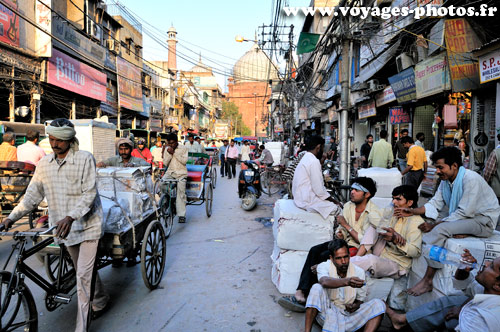
The fact is that India and Asia are not pleasant places outside the little bubbles westerners and the local rich people build for themselves. You want to go live in New Delhi? Be my guest: http://www.voyages-photos.fr/images/new-delhi/new-delhi05.jp..., http://www.voyages-photos.fr/images/new-delhi/new-delhi08.jp....
I'll be chilling here in America, where the bottom 10% live as well as the top 10% do in developing countries.
EDIT: I'm not advocating being ignorant of the world. People should travel, and people should learn what there is to learn from other countries. But I consider it a problem if young Americans have to go abroad because there are no opportunities at home. That's a failure of our social system, and a threat to our communities and our institutions. My father didn't leave Bangladesh just so my daughter would have to go back.
If the successors should reap the benefits, then should they also pay for the sins? E.g., continued restitution for slavery (which, while abolished has left deep racial scars in society) and for the genocide and forced displacement of the indigenous population (nobody exactly gave the land back).
Seems unfair to only reap the benefits, and then say the past crimes were committed by other people...
Very true. But it's a perspective many people born and raised in the US lack. (Witness the HN thread a few days ago about the guy who retired at the age of 30, with people slamming him for living at a "poverty-level" income. Which of course means he lives better than 70% of the world's population.)
Long term travel (but not necessarily career-oriented work in foreign lands as this article suggests) is important to gaining that very important perspective.
http://www.aljazeera.com/news/asia/2013/04/20134271442181816...
Ignorance is bliss. Let me spell it out for you. THERE IS NOTHING FUN OR EXCITING ABOUT IT.
You clearly have never lived abroad. Money goes further.
I once lived in Cuba, for an internship. I had housing and food provided by my employer, they paid the family $800. I had $500 spending money on top of that.
I lived like a KING. I've never been that rich in my life. People made my food, cleaning my room, cooked for me, did my laundry.
Many thing that I wanted to buy could be had for a fraction of the price. I'm led to understand that this applies across the developing world.
In particular, you can hire PEOPLE for a fraction of the cost you can get interpersonal services here. This has an incredible impact on your real standard of living.
According to Wikpiedia, bottom 10% maxes out at 10,500 in America.
That is POOR, assuming you don't have health care or housing provided.
I couldn't find reliable figures for China, India, Brazil or other countries, but I'm very certain I'd rather be in the top 10% of those countries than the bottom 10% of America.
Anyone have figures for those countries, or experiences being 'well-off' in a poor country?
But if you look at their apartments, personal possessions, etc, their standard of living is comparable to people living in public housing in say the Bronx.
*) My dad once asked one of our servants, a young man maybe 18-19, to go buy a pack of cigarettes. He came back without the cigarettes, telling my dad "I'm sorry, I couldn't buy them--they were [as much as he made in a week or two]." He never asked him to buy cigarettes again... In general, its extremely awkward to have domestic servants in poor countries because those people are actually really poor. Their kids have no opportunities. They'll work until they're dead with no hope of retirement.
You'd be right about Brazil.
http://economix.blogs.nytimes.com/2011/01/31/the-haves-and-t...
Just a statement like "where the bottom 10% live as well as the top 10% do in developing countries" really shows you haven't been outside your home town.
Actually, parent is probably right here quantitatively speaking. At least this is true where I live (China).
The real problem with that statement is that it misrepresents the problem.
The fact that our poor live as well as middle class (or even upper class) in developing countries does not mean anything, because our poor do not compete for the same resources and opportunities as those people. Our poor compete with our rich, and the wider that gap, the worse the situation.
In other words, what really matters is the standard of living of our poor relative to that of our rich.
Also, how much do you value clean air and decent schooling for your kids?
I've been out for 7 years now, and I don't regret it. But its not an easy win life style wise.
To put this into perspective: median annual salary for software engineers in Malaysia is about RM45,000, which is $15,000 a year. A 'highly-paid' consultant might make about RM150,000 a year - all of $50,000 per annum.
Schooling is the most expensive - there is no free public schooling worth sending your kid to. A good school can cost INR. 100,000 per year and even the poorest person I met aspires and scrapes money to be able to afford the astronomical fees required to send their kid to a "private English-medium" school.
Watch the move "Lost in Translation"
If you can deal with forever being isolated, even with friends, then by all means live overseas.
You will always be an outsider, no matter how acclimated you become. If you're ok with that, then you'll be fine.
Otherwise, stick to America, it really is an awesome country to live in.
I also don't want to discourage anyone from leaving their culture to try something new. It's an amazing truly eye opening experience.
Just be aware of the challenges you face.
Instead of career-oriented work abroad, I always suggest that younger people with few responsibilities save up money for a year or two and then take a year or two off to travel instead. You have to commit to a longish period--two weeks in Hawaii or Berlin doesn't count. But the experiences you have, and most importantly the people you meet (including other travelers) will change your perspective permanently, and you'll then be better armed to make a decision on where to build your career.
But leaving all your family and friends behind to live there might not be for everyone. There was recently a nice article posted about relationships being more valuable to human beings than ambition: http://www.theatlantic.com/health/archive/2013/04/relationsh...
Not to mention, for a guy like me who is Jewish, and whose family would like to see him marry someone Jewish as well, moving to a country where there are very few Jews would just be decreasing my chances of starting a family. That's why it's good to travel for long periods when you're younger.
http://en.wikipedia.org/wiki/Jewish_population_by_urban_area...
I spent nearly two years abroad in undergrad interning abroad, but even then, finding a relevant (not teaching English) full time job in Asia or Europe when you're in North America is extremely hard.
There are many places where you can have a much better standard of living than the US for the same price - including regular roundtrip airfare to visit your friends and family. There are frequently huge tax advantages, as well.
> Your market value is higher elsewhere
While true, it's also slightly simplistic. It's more than just market value. There's an American mindset that has its plusses and minuses (like any mindset), but the ability to combine the plusses of the American mindset (entrepreneurship, risk taking, "fake it until you make it") with the plusses of foreign mindsets (in my case: high value on community, stubbornness, practicality) can be a potent mix.
> The quality-of-life/cost-of-living ratio is now much higher elsewhere
I'm reminded of when I lived in NYC, and friends would ask how I could afford it. My answer was that you value different things differently when price informs your choices. My first years in NYC I didn't have cable, didn't have a car, and even used dial-up from home. I didn't mind, though, because there was plenty to do without TV, easy public transit everywhere, and lots of cafes and libraries with network connections.
Similarly, I've found that where I am now a lot of things are cheaper (fruits, vegitables, dining out...medicine and health care) and some are much, much more expensive (cars, gasoline). Again, I let price inform my decision making, and overall I feel much happier and healthier now that I'm eating well, socializing more, and walking places.
> The Jobs Aren’t Coming Back
Put another way: the rest of the world is waking up! Is there really any reason that most programming jobs should be in Silicon Valley? Are people in Brazil, Germany, Malaysia, Kenya, etc. less capable of writing software? On top of this, many places are getting a "second chance" to grow their economies (esp. the service sector) without making the same mistakes as the US (allowing the skilled trade/manufacturing sector to languish).
> It’s time for everyone to grow up and become global citizens
The most shocking thing, for me, on leaving the US was realizing that there is almost no other country in the world where someone would dare consider themselves "educated" or "well cultured" yet have never been somewhere where the people did not speak their language.
Go where they don't speak English. Then you will understand how to communicate.
---
Also, for everyone here commenting about China and India, a small suggestion: look at Eastern Europe, Western Asia, Turkey, and the Middle East. The demographics are positively tantalizing for anyone looking for economies about to take off!
Yes, Europe is also struggling with the world economic issues and part of this is the fiscal/monetary dichotomy of the Euro that they've not worked out, and clinging to austerity to save face (and because it sounds reasonable when the overspending straw man argument is pulled out). However, most of Europe (I tentatively exlude the UK) doesn't have the deep structural problems that the US has.
* The US has dropped from 1st to 12th place, internationally, in the number of people under 34 who've graduated from college (http://completionagenda.collegeboard.org/sites/default/files...)
* The US murder rate, while at it's lowest since 1995, is four to five times higher than any Western EU country (http://www.unodc.org/documents/data-and-analysis/statistics/...)
* The US the highest number of people in prison, per capita, than any other country on the planet (http://www.nationmaster.com/graph/cri_pri_per_cap-crime-pris...)
* The US has gone from one of the developed world's lowest infant mortality rates to one of the highest (http://www.huffingtonpost.com/howard-steven-friedman/infant-...)
* US education levels are falling (http://www.google.com/hostednews/afp/article/ALeqM5juGFSx9Li...)
And I haven't even talked about health care or income inequality or the chipping away at the petrodollar, potentially ending the dollar's status as the default world reserve currency.
The US has deep, deep structural problems and these are long-term problems. Europe has some issues, too, but I don't believe the traditional US advantages of entrepreneurship and limited regulatory environment are enough to offset the EU problems.
The 21st century belongs to Europe and China unless the US stops its political crap, rolls up its sleeves and gets back to being the America we thought it was. There's still a huge potential in the US and it's a great place that I miss in many ways, but it's no longer the land of opportunity (http://www.washingtonpost.com/blogs/wonkblog/post/why-us-eco...).
I agree that everybody should spend time overseas. It very rarely is a mind-warping experience, but over time it changes your perspective in ways that are very hard to communicate. That slow process of taking textbook facts and walking around in them and making them real is something that has to be experienced to grok.
I recall my wife, who grew up in South Korea and immigrated to the U.S., but who had never been to any other country, the first time we visited the mainland of Italy. The gargantuan magnitude of ancient Rome simply overwhelmed her. Growing up in a very old culture, and then living for years in a young one, she had built up a kind of healthy hubris that was simply shattered walking through thousand year old remains of something as mundane as a public bath or a stadium or a public square. Things which modern Korea has plenty of, but to see that somebody else had come up with the idea and built an empire full of these things centuries before her culture had even come up with their own written language was thoroughly humbling.
She initially felt it diminished where she came from, but over time she was able to assimilate the experience and finally appreciated it, not as a diminishment of her identity, but as an expansion of it.
All that being said, I disagree with this article:
1 - Marketplace value due to oversupply of college grads in the U.S. vs. undersupply elsewhere: In many of the countries I've visited, the number of highly educated barristas, taxi drivers and other low-end service workers is simply overwhelming. I've met people with dual Master's equivalents who spend their work day standing in a costume at the entrance to a parking garage at a department store bowing to cars coming in. Trust me, getting college grads into jobs where a college degree is needed is typically not a problem in most countries (think supply and demand, if this were even trivially true, those jobs would pay astronomical salaries, but even in highly developed economies like Japan, they don't). Unless you just happen to have some specific skill set, and happen to be fluent in the local language, chances are this entire reason simply won't hold true.
2 - Quality of life: True in some still developing, but otherwise nice countries, absolutely false in the developed areas. Moscow, while still so-so, can easily cost more than NYC to live in; 12 years ago you could live in Seoul for about 1/3rd of life in an urban part of the U.S., today it's about the same, a nice meal in Bangkok might cost you more than in U.S.! Caracas now ranks in the top 10 most expensive cities anywhere, likewise Singapore. Fancy paying $8 for a beer, or $20 for a movie ticket? Welcome to Kinshasa and Port Moresby respectively.
Other modern conveniences might similarly cost much more, how about paying twice the U.S. price for an iPad with no app store support for your country. How about Singapore's insane car ownership tax, how about paying $40,000 for a Honda Civic? And oh yeah, gas will cost you. Let's move to Seoul where you have to put a deposit down on an apartment so large you can't even buy the car in the first place.
Let's not forget lax food safety standards, corrupt police, unbelievable pollution...yes I'd like to live in Beijing where every day outside is like smoking a pack of cigarettes.
Before you know it, the thin veneer of pseudo-quality of life familiarness goes away astonishingly quickly when you're squatting over a hole in dirty train station because the camel foot you ate wasn't cooked enough.
3 - The Jobs aren't coming back. Nonsense, it's a pendulum for some jobs and doesn't matter for others. Do you think all the high-end finance jobs are heading for Urumqi? Or that we're suddenly going to start outsourcing local auto-accident lawyers to Dehradun? If anything, the U.S. is shifting lots of outsource jobs back into the states after realizing that outsourcing development, even at cheapo labor rates, often costs more. If the number of Indians moving into my part of the U.S. for high-end work is any kind of thermometer, the jobs are definitely coming back. A commuter bus I take every once in a while completely defies this logic with a majority of the riders educated and Indian!
As China's standard of living is increasing we're seeing the obvious effects, it's not necessarily going to be cheaper to build stuff in China forever going forward. And obviously, moving to an area like that defies #1 and #2 above due to lousy pay and long hours in a job where you can assemble an insignificant part of a device that'll be bought and used thousands of miles from you.
4 - Yeah, broaden your horizons! I don't disagree, but think of it this way, would a New Yorker, struggling in the tough competitive environment of NYC suddenly move to rural Arkansas because he might get a job more easily? No! Why move to another's country's version of the same? I've often been surprised at the places I'd love to move to (and even at the places I wouldn't). But I've got to get real, no matter how cheap the table wine is in Florence, moving there is not going to give me any kind of jobs benefit whatsoever.
Take an ESL teaching job for a year in another country for the exposure? Cool! But don't think it'll substantially distinguish you in the market or give you any other benefit other than a unique life experience.
I truly don't get the hype about that movie. They definitely got the visuals right, but a lot of it felt "off". Quite a few of the cultural stereotypes were awkwardly over-played too.
Also, Japan is really a different bird when it comes to integration. Not all countries have the same jarring and visceral division between foreigners and local society.
Don't get me wrong, the international community is very accepting, even loving. But when you get to actual nationals, other than a few exceptions, you'll never be truly accepted.
On the overplaying the foreignness people on their first sojourn in a really foreign country do the tourist goggling all the time. One needs a lot of foreign travel experience to start treating it as just some more different shit.
If you have specialized skills, you should be able to find demand for them anywhere. You probably can't start a career here with nothing special in your resume, but you can work for a big corp (e.g. Microsoft) and eventually get transferred to one of their overseas R&D offices. They generally value experience, which might not be something they can get locally.
I'm a LHF (local hired foreigner) in China, and my pay is decent enough. The lack of a package isn't bad if you don't have kids. I also work for a big American corp (but not as an expat), so my prospects are pretty good when I decide to go back. Not exactly a career killer, even if not working at home headquarters always has a disadvantage associated with it.
Join the military - we have bases all over the world and chances are you might end up assigned to one.
Join a Federal Agency that does overseas work - State, Intelligence Community, etc.
Join a megacorp with a substantial overseas presence, apply only for jobs that are in countries you want to live in. They'll handle all the work visa nonsense.
The good news is that for most of these, there's lots of bonus pay/subsidized housing involved. Working overseas you can save unbelievable amounts of money.
Having an in demand skillset (like being a developer) opens up a lot of possibilities.
I spent two summers in Tokyo in an investment bank, although I was too focused on having as much fun as possible to find what non-finance opportunities were available. Also, the prospect of working actual Japanese hours were not very exciting. How was the work-life balance at Ubit?
How is the market in Japan for (foreign) developers? If a recent grad were to follow your footsteps, how difficult would it be to find a decent and relevant job now, compared to 2006?
Edit: Sorry, replied to the wrong comment, but it still applies somewhat.
I value personal services far more than most tech items beyond a laptop and phone. And they also cost more here which makes me overvalue them mentally compared to their global value.
I also read 'developing' for 'poor', which made me take a broader reading of your point than I think was warranted.
You can take advantage of local labor sometimes, but its definitely not a given, and it never lasts very long.
In the USA we take the freedom to wear bikinis and shorts for granted. Hard to see women in India dressing like Americans do.
Ignorance is bliss. Let me spell it out for you. THERE IS NOTHING FUN OR EXCITING ABOUT IT.
As a rule of thumb, when you make hyperbolic statements like this, it becomes very easy to not take you seriously.
Good developers are in demand everywhere! If you're a developer who has some side-project / open source contribution you can show off, I think finding a job isn't too tough.
I can't really comment on now vs 2006. I had no network back then, so that job was literally the only interesting looking one I could find. Now, I know of lots of good companies.
I lived there for a few years as a teenager, and didn't really have an experience that jived with the general atmosphere depicted in the movie. YMMV, I suppose.
My brain took a statement which I thought was an error, and could have been based on lack of personal experience, then jumped to the conclusion that it was lack of personal experience.
Second, I made a logical error that I wouldn't have made face to face. Developing countries is a very broad term. So I think now there are countries where the quoted sentence is true, and some where is isn't.
In real life, I probably would have clarified which countries the OP had in mind (from subsequent discussions he clearly meant the poorer ones in the group 'developing countries')
It would be really hard to get hired out of college into a tech job overseas. But with 3-4 years experience in San Jose, you could transfer to Beijing fairly easily, though as a LHF, not an expat. To get an expat package, you need to be a big shot.
Numbeo says it is up to date (April, 2013 for Houston data and May 2013, for Bangalore data). I feel that the (Bangalore) housing numbers are reasonably accurate because: 1. Data being crowd-sourced with no real incentive for contributors to lie; 2. Going by personal experience
> If you check out a property listing site: <http://www.magicbricks.com/propertyDetails/3-BHK-3000-Sq-ft-..., it says INR.60,000 which works out to approximately $1153.84 (around 52 rupees to a dollar). Obviously, numbeo.com has got the most important (housing) numbers wrong.
This is a texas sharpshooter argument. It is based on a single data point---which happens to be a 5-floor multi-storey apartment---which is hardly a representative sample of (single floor) 3-BHK apartments in central Bangalore. Claiming that numbeo has got housing numbers wrong by this one data point alone is ridiculous.
There are fresh graduates in America right now that can't find jobs. More clearly, these fresh graduates would be homeless/living in poverty were it not for a little help from their parents, either that or they're holding on to the last shreds of help that our welfare institutions provide. These folks could leave America and find jobs elsewhere that might give them a very, very nice looking income.
I have a friend who was a history major who couldn't find a job right out of college, he went to China with really no clear idea of what he would do there (besides being an 'English tutor', which his sister already living in Shenzen was)... and what do you know, some company decides to hire him to be their spokesman. It turns out businesses in China will pay white/Western-looking people some serious money for gigs like this. He's now in China, with a Chinese wife and it seems to me he's pretty happy with the decision he made. Opportunities like this do exist, and they're actually not that uncommon. Leaving America for a better life is now very much a viable option. Not for everyone, sure, but for some it could be the best decision they ever make.
You're still missing the point.
You emphasize guaranteed emergency care, but what about general non-emergency healthcare costs in America? If it's +1 for guaranteed healthcare in America, it's +1 for India when you can actually practically afford some life-saving x-ray or some surgery operation that costs literally 20X as much in America. Electricity is available in counties we're considering -- sure, it goes off intermittently but the results are not extraordinarily catastrophic. Practically speaking, the produce that the masses get is arguably better in a lot of 3rd world countries than it is in America -- less GMO, less carcinogens. I was born and raised in India -- my memory of fruits and vegetables/meat I ate there is SOOO much better than how it is here in America. We had flushing toilets, and we had drinkable water. And I am not even from a wealthy family, just normal middle class. My great-grandma lived to be 101, and my grandma right now in India is 103.
It's unfortunate that people here will think I'm being glib with this comment, since diarrhea kills more people in the developing world every year than cancer does in the US.
In general I agree with your sentiment. But you do make it sound like people in India are dropping like flies because of diarrhea (which I am not sure is the case)
I find America boring when I visit: very nice and clean, very generic and sterile. I have no idea how I will adjust when/if I come back.
Having lived in one poor country (Cuba), I found your statement as incredible as the grandparent comment's author did.
Bottom 10% in America is $10,500 according to Wikipedia. That doesn't get you much standard of living.
Everything is cheaper in the developing world, so seemingly small amounts can go much further.
Monthly salaries are about $15-$30. No, I'm not forgetting a zero.
They get free education and health care (though quality of the latter varies) and they get a few cheap food as rations.
There are a few other benefits, but in large part they're quite poor.
*) American school spend on average $10k/year per student.
Wrong is wrong. I shouldn't need to spell that out, but I obviously do. Whatever point you're hoping to make, you do it an incredible disservice by yoking it to comments like the one I responded to above.
To be clear, I'm not advocating here that hey if you're in poverty here might as well leave the country, I'm saying if things are not working out spectacularly, you're stuck with a dead-end job (or are having trouble finding employment despite a degree), and you are adventurous/wouldn't mind a big cultural change, you can think about it carefully and plan things out and you'll be fine. Getting out of America for a better life is a very real and viable option in this day for some people.
The problem of wealth disparity in the US is exclusively one of burden sharing: disparity is a problem when those of lesser means are required to make actual sacrifices, like risking bankruptcy for an appendectomy, or sending their kids to classrooms with a 45-1 student/teacher ratio. It's a problem implicating disparity because the Bugatti drivers could, it's often asserted, pick up a greater share of the burden while feeling less of the impact, because the marginal utility of their dollars is less than those of a poor person.
But the problem is not simply that there are rich people, or that they have things you & I don't have. Many of the things rich people have are stupid. But even when they're not, they almost never cost you anything; in fact, because the rich choose to soak themselves with Veblen goods, their extravagant purchases actually help you by driving the economy.
So yes, living among people who make much more than you obviously depresses your standard of living / cost of living.
Measures of "happiness" and "contentedness" are tightly bound to our environment. Being at the respective top or bottom of a given social order has a meaningful impact on quality of life perceptions. Obviously, some Maslow'esque hierarchy of needs applies here, and no-one in the world is happily starving.
> But even when they're not, they almost never cost you anything; in fact, because the rich choose to soak themselves with Veblen goods, their extravagant purchases actually help you by driving the economy.
That seems to make the implicit assumption that conspicuous consumption is the most effective means of investment for those assets. It may well be the case, but I've never seen it suitably demonstrated.
I'm not saying that buying a Bugatti is a social good; it clearly isn't. I'm just saying that those purchases aren't a drag on the middle class, except to the extent that they represent a missed opportunity for a more-just burden sharing to offset a needless sacrifice by the working class that could realistically be addressed by the rich.
Again the point is: simply sitting around being rich isn't intrinsically harmful to the lower and middle classes.
Obviously this doesn't apply to an iphone, a private jet, or a Bugatti Veyron.
But if you want a haircut or groceries, it applies. Likewise to a host of other goods and services that the poor spend money on.
Give me bottom 10% in America ($10,500) and I'm very, very poor.
There are countries where you can live like a king on that same amount of money.
(It depends how much you value personal services such as maids, cooks, etc. which tend to be most affected by this phenomenon)
Sort of stupid. It actually costs money to eat healthy, which many people can't afford in the states (fresh fruits and vegetables, grocery store far away, no car, just by crap at the convenience store then).
The US doesn't compare well to Europe on quality of life for those not in the middle class. Ya, they can afford some crap, but not what they really need to improve their lot (decent food, decent education, healthcare...). The libertarians don't really get that, and think everything is peachy perfect in the states (except for too much socialism).
http://npc.umich.edu/publications/policy_briefs/brief28/poli...
This reminds me of Medicaid in the US. Something like 20% of the uninsured in America are actually qualified for free healthcare, but don't enroll.
Fair. I've long held the opinion that, within reason, "less" income inequality is better than "more". However, your statement is accurate.
But, I agree with you India probably isn't the best possible choice here (but still, as others have pointed out, if you have America money (say, 80k), you'll be living there like a king). There's still a lot of other countries besides America that might be a good fit for you.
Of course, one could always hit the gym...if they have enough money (or just move to California and ride a bike everywhere...if they have enough money).