The Cord-Cutting Fantasy(stratechery.com) |
The Cord-Cutting Fantasy(stratechery.com) |
No, it isn't. I cut the cord, and watch media on Netflix & Hulu and buy 2-3 shows on iTunes. To get the same number of movies and series on TV I was paying for a $100+ per month cable bill. Now I'm paying $40 for internet and $8 for Netflix and about $6 per month from iTunes TV shows. So I get a better experience, can watch what I want when I want it, and pay about half of what I used to.
But if everyone does that, the economics of content production totally change. The shows you're buying now might not even get made in the first place.
In other words, the quote you pulled could use some more context: "The truth is that the current TV system is a great deal for everyone [including the current cord cutters]."
I would argue quite the opposite. If everyone switched to 'cord cutting' more content will be made for Netflix, Amazon, Hulu etc, maybe even pushed to all rather than exclusive deals.
"The truth is that the current TV system is a great deal for everyone." I partially agree with this statement. I would remove 'for everyone' here. Clearly for darkchasma, cord cutting was more cost effective. Personally, if ESPN was available online, I would cut the cord because there is nothing else I need from cable.
The OP clearly has the numbers incorrect (only looking at primetime data) but does have a point about a-la-carte prices being higher. However, the assumption here is all viewers are on cable or all are off it. However, with a gradual transition, the price will not have a drastic impact.
Lets assume that ESPN makes itself available online. You might see a flurry of cord-cutters flock to online-only mode but there will still be plenty left on cable. Between the two, ESPN will continue to hit the revenue numbers by refining the cost on each side.
I personally think that over time, the online model will follow cable where content providers will group channels to provide discounted programming.
Why should I pay exorbitant fees to get access to the same content I already have access to at times that are inconvenient for me?
Meanwhile I get vDSL from the telco for $30. I do not and never have watched enough broadcast TV to justify almost tripling the price..
The logical conclusion would be that large numbers of people never watch their cable TV at all and just subsidize entertainment for the rest of us. I don't think I believe that, given U.S. entertainment consumption habits.
Looking at his sources I think OP's error comes from the fact that he is using Primetime viewership as a metric. I'm going off assumptions here, but I would think that ESPN's major value add is huge number of people watch ESPN at all times of the day. SportCenter, for example, doesn't air during primetime, but airs continually throughout day.
Looking at the Primetime numbers, The History Channel scored higher than ESPN. However I would guess at all other times in the day, ESPN has a much, much higher viewing audience at other times of the day.
At the very least, there is a group of people who are willing to pay for unbundling.
Consumers - Cheaper for most consumption patterns.
Content creators - Flexible release schedules, deep viewer analytics, more power over networks.
Networks - Only remain relevant as publishers and speculative content investors.
Cable providers - Each hour of TV viewed will earn more money, but less hours will be viewed. Quickly are turned into dumb pipes.
So what happens? Networks and cable providers are going to hold on for dear life, while consumers and creators are going to route around them.
It may be true that splitting the price encourages us all to eat more, and pay less attention to price. That increases the demand for everything, and expensive options in particular (the lobster and filet mignon).
It's entirely possible that switching to a "pay-for-your-own-meal" model would reduce the amount of food people buy, and possibly even end with the expensive options being removed from the menu.
But our current situation isn't better for everyone--it's just better if you really like to eat, and especially if you really like to eat expensive things, because you'll be subsidized by the people who just get a salad.
No, this is wrong. The linked article where this stat is pulled showed an average of 1.36MM viewers during prime time. That's only 3 hours of the day.
I'm not familiar enough with TV metrics to speak to this, but I don't think standard metrics that are public are going to give you the kind of data you're looking for here.
Just from anecdotal evidence, I don't see anyway that only 4.8% of cable/sat households tune in to ESPN at least once a month. I'd have a harder time finding a family I know where no one in the house watches ESPN than a family where someone in the house does.
And the number essentially means 19 of 20 "cable families" have zero ESPN viewing. Maybe I'm wrong, but I don't see that being a realistic number the methodology that created the 95% statistic wasn't exactly solid.
Update: It’s been pointed out, correctly, that I’m talking about unbundling, not cord-cutting. That’s technically correct. However, I think folks who talk about cord-cutting still want the same content. That’s the fantasy I’m referring too. Still, I regret the imprecision ↩
I think he doth protest to much.
Cord cutting makes PERFECT SENSE for the viewer.
We haven't had Cable/Sat in our house for over 5 years. Don't miss it (or it's outrageous cost) a bit.
We've been cable free for a little over a year now and I've missed two sets of NBA playoffs. I chomp at the bit to watch playoff basketball for two months and finally get my fill when the Finals come and are put on a broadcast network (ABC).
If I want to pay to watch the NBA playoffs without cable I can, I just have buy an NBA League Pass (which I'm cool with) and then pay for a VPN service and route all my traffic to another country (which I'm not cool with).
The same is true in the UK for Premiership Soccer, and I'm sure it's true for other sports in other countries.
1) Poor User Experience 2) Too much mind numbing content 3) Price 4) Ad(s)
Poor User Experience
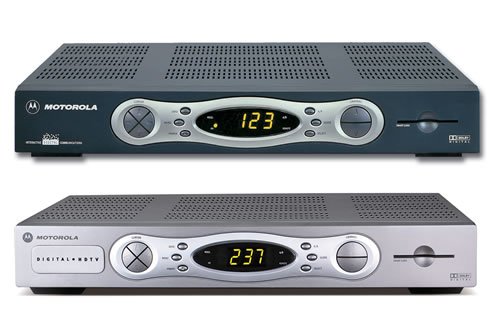
While this isn’t true across the entire industry the few places I’ve lived have had terrible set-top-boxes. It has never made since to me that I am forced to use an interface that looks like it was designed in the late 90s. The guide is slow and has very few customization options. Direct TV did have a pretty good guide when I briefly had satellite which isn’t available in my apartment. Past Cable Companies: Longview Cable TV, Suddenlink, Grande Communications Link to horrid cable box that most of the providers I’ve subscribed to use. http://telecomlead.com/wp-content/uploads/2012/10/motorola-s...
Mind Numbing Content
I really don’t need to catch up on “Storage Wars: Texas”. After a long day, I found myself mindlessly scrolling through the guide and selecting some mindless show. I realize this there is other content available and I made the choice to watch the show. The point I am trying to make is that TV wasn’t contributing anything to my wellbeing. I’d much rather fire up a PC game and at least engage my brain while blowing off some steam. It feels wasteful to me to pay for 200+ channels and only utilize 3-5 I found myself watching less and less TV. I thought I would miss sports(ESPN) but I’ve found that I really don’t. It turns out that was just something I did to kill time. When I turn ESPN news is on @ a coffee shop, I realize how similar it is to CNN headline news. The newscaster regurgitates the same information in a new wrapper and explains why this is supposed to be “important”.
Price - Ads
Advertising was really the kicker. Commercials are so terrible. At the risk of sounding like a tinfoil hippie, I got tired of having the messages massaged into my head about why I need X new product to be a real man. Ford, lay off, I don’t care it is “Truck Month” again.
The experience of sitting down and watching TV has really gone downhill. I pay to use a poorly designed user interface which has the audacity to display Advertising on the guide. For me, I’ve never felt valued as a cable TV subscriber. So, I decided to cut it. Ad on the guide: http://imgur.com/wIctmj1
I still watch Comedy’s like New Girl, Mindy Project and The Big Bang Theory. I’ve purchased all three seasons of “The Walking Dead”. I purchase season passes via iTunes. Who cares if I don’t see it the day it comes out? The great thing is, I get to keep these shows and I watch them Ad free. That is a BIG plus in my book. I haven’t done the math to see if I am saving money but I feel that I am getting what I want with the money I do spend. I can take my apple TV to any house with internet an instantly access all of the media I’ve purchased. That is awesome. To me, it is worth it to pay a bit more to strip out all the ads and have the convenience of watching it on a ton of devices.
My point is I want to “reward” a company with money if they provide the features I am looking for, in this case Apple + the Studios. I want the cable industry to change into something that belongs in this decade, so I give them less money. (I say less because they do provide me cable internet which isn’t bad.)
The end of the ramblings
I am not sure if there is “theme” or point I was trying to make here. I am an ex-unhappy cable customer. I love consuming media, the distribution methods just need to be tweaked to something that makes more sense in this day and age. I understand the author is trying to say it isn’t economically viable to cut the cord because the current system is the best for everyone but I just don’t buy that. I refuse to believe that.
At any rate, thanks for writing the article, I enjoyed reading it but I hope you are wrong.
It's even worse with movies; most you can't rent, and buying them costs as much or more than buying DVD's or Blurays (if you impulse buy on sale, which I always did).
The subscription "all you can eat" model is great. The thing that needs to change from current cable is that I should be able to watch it wherever and whenever I want (and pay not to have ads). The issue right now is that the contractual relationships are so complex that no one is able to cut through the mess to put together the right offering.
Actually, it makes perfect sense for the viewers - the networks are the ones that it inconveniences. People simply won't pay the increasingly high rates which are borderline ridiculous. You could get a nice used car for the same monthly payment of some of these internet/cable bundles.
I may be way off base though. Does anyone with more experience wish to correct me?
> Only 4.8 percent of households watch ESPN. If ESPN were only available a la carte, each of those households would have to pay $101.60/month for ESPN to achieve the same revenue numbers they do currently > The 95.2 percent of households who don’t watch ESPN would only see their cable bills decrease by $5.13 were they able to exclude it
Is like: Cutting XYZ program would significantly hurt a small group, who understandably protest. It would save each taxpayer only $1 a year. So it probably doesn't get cut.
If ESPN is unable to sustain the level of content/quality they currently show without huge subsidies, they shouldn't be making it. The subsidy to ESPN implies that channels and shows that I DO WATCH are not receiving a fair amount of my bill for the time I spend watching them.
This is not a "better for all" type of socialism. It's a "better for the entrenched" type of taxation.
To reiterate a common theme in the comments: "A la cart distribution is good for consumers and content creators, and is bad for networks and cable providers"
I have a strong hunch that if we actually did these numbers, we'd see that there are a few programs that are way more expensive to produce than others. (ESPN and sports licensing fees come to mind).
Which means bundling artificially props up overpriced content - I'm really not sure how you can come to the conclusion that that is good for everybody.
It's currently about U$ 40 for the cable tv basic package, as there's a flaunted "oligo"(mono)poly here, which even managed to outlaw Carlos Slim's company - he doesn't care because Uruguay is not a relevant market.
Local football matches and European football drive a lot of cable packages, along with HBO and kids' shows and series (which are mostly available on Netflix).
I suspect people tune into ESPN occasionally (a "luxury" made possible by bundling) but would not choose to subscribe to it separately.
The "idea" of Netflix as an exclusive content creator has big ramifications. Nascent competitors like HBO get put "on notice". Amazon, who wanted to disrupt them with Prime streaming are put back on the defensive (most of Amazon's similar efforts are pretty lackluster). And in general, investors like it also, as it means a new possible disruption area for Netflix. Furthermore, employees can be proud of something that's an in-house product/process.