Pharo 4.0 Released(pharo.org) |
Pharo 4.0 Released(pharo.org) |
"... an object-oriented programming language and a powerful environment... (think IDE and OS rolled into one)"
An IDE and OS rolled into one? What does that even mean? I had to go to Wikipedia to learn that this is basically a modern Smalltalk implementation. So why not just say that on the main page?
I once took a glance at IBM's Smalltalk about 20 years ago (in fact, these IDE screenshots remind me of the "VisualAge" IDE that eventually morphed from Smalltalk to Java and was then re-invented as Eclipse). However, I don't know enough about Smalltalk itself for this website to be informative. Does it compile to executables, or does it require an interpreter or VM at runtime? Can applications be built from command-line (or a build script on a CI server), or is it tightly coupled with the IDE? The Wikipedia article mentions some web frameworks, but the Pharo website shows screenshots of what appear to be desktop GUI applications (or maybe data visualizations running inside the IDE, a la R with RStudio?).
Maybe someone with some hands-on experience could provide a TL;DR, for those who aren't willing to read the full book just to get a high-level sense of this?
No it does not , but there is no need. Pharo can be distributed with your application and it does need to installed its a standalone.
"or does it require an interpreter or VM at runtime?"
its interpreted to byte code and it has a JIT VM. It is always runtime ;) Meaning everything is live and running even your source code. Compilation happens under the hood without the user being aware of it.
"Can applications be built from command-line (or a build script on a CI server), or is it tightly coupled with the IDE?"
There is a command line interface , also any method can be exported to command line and Pharo can run without a GUI.
"The Wikipedia article mentions some web frameworks, but the Pharo website shows screenshots of what appear to be desktop GUI applications (or maybe data visualizations running inside the IDE, a la R with RStudio?)."
There is a web framework which quite popular and actively developed Seaside that allow you to use javascript , html and the usual suspect. Plenty of others frameworks exists as well but not so actively developed. Most success stories in the web site use those frameworks.
"Maybe someone with some hands-on experience could provide a TL;DR, for those who aren't willing to read the full book just to get a high-level sense of this?"
you can also drop in IRC for general directions, and ask questions to the mailing list, the community is very welcomed for newcomers. But give pharo a try and ask questions and you wont regret it Pharo is a great way and fun way to create software.
I have made also video tutorial for newcomers
https://www.youtube.com/watch?v=Ol5ivaEATLQ&list=PLqbtQ7OkSt...
I have also made this simple guide to explain what Pharo really is
For people that know Smalltalk, "a Smalltalk environment" contains more information than "an IDE, OS rolled into one" (which you also could possibly apply as a description to some javascript environments or a whole number of other things that could exist, it is not like Smalltalk is the only way to build such an environment)
"Operating System: An operating system is a collection of things that don't fit into a language. There shouldn't be one."
Syntactically, the SmallTalk language is relatively straightforward, but the power of SmallTalk is that the designers envisioned so much more from what a programming language should be. SmallTalk has a "World" which is an incredible concept (this is the OS/IDE combo). Of course, this means that you must abandon every tool you use to start working in the language. But in exchange you can click on any window and view the source code for it, see where it fits in the object hierarchy etc. Every part of your development world can be interacted with and modified. You can open the same world from a usb drive on Windows, Mac and Linux. Unlike Haskell, it's not the language itself that will expand your vision of programming, it's the approach to what it even means to have a programming language.
http://www.cs.virginia.edu/~evans/cs655/readings/smalltalk.h...
Although it uses Smalltalk-80 syntax (almost), syntax is the least important part of Smalltalk. The real juice is the idea of a computing environment small and beautiful enough for one person to understand entirely - and fun! Toward that end, we feel that Pharo is evolving far enough beyond St-80 that it's more useful to think about it on its own terms.
Unfortunately, ideas that are truly different than the status quo are impossible to describe in a sound bite. Like learning to play a musical instrument, there is no shortcut - extended play is the price one must pay to shift to a more powerful perspective. But I hope this gives you a taste. If you're interested, I go a bit more in depth [on my blog](http://seandenigris.com/blog/?p=1092)
It looks like they are still using (since 2010) the COG VM, which is a fast jitting VM, but I think they have others in works to replace/improve it.
This is the first step towards a 64bits VM (yay!)
Because most people would not be intrigued by a site that said:
  Pharo
  Basically a modern smalltalk implementation
Things that I find especially interesting, from new stuff:
> TxModel, a modern text model who works with Athens (Preview)
This is very, very nice. New text model was in the works for quite some time now and I'm glad it finally landed. Easy and powerful text editing is important, even in primarily GUI-driven environments. Pharo was a bit behind the times in this regard, which resulted in, for example, Shampoo (http://dmitrymatveev.co.uk/shampoo/).
> OSWindow, a new way to handle windows and input events (Preview)
This allows for creating OS level windows from inside Pharo. IIRC it's supported only on Windows right now, but it's a very nice feature and will make creating apps that "look natively" easier.
> Slots model instance variables as first class enities and enable meta-programming on this level.
This looks rather important and I remember reading about it some time ago. There's a paper about it: http://scg.unibe.ch/archive/papers/Verw11bFlexibleObjectLayo... - I'll need to read it again now that it's implemented.
Then there are updated things, all very nice too. Congratulations to the team and contributors!
That sounds similar to Self, where everything was expressed with slots, including instance variables. I believe Self also had a way to mark slots as immutable, which would be an awesome feature to get in Pharo.
I gave Pharo a test drive a few months ago and was pleasantly surprised when I had a little window with a table listing out all of the links and titles on the front page of HN in an afternoon.
I really enjoyed the experience of "filling in the blanks," style programming that it introduced to me. I just started by instantiating an object and calling the entry point method... and landed in the debugger. But I was able to fill in the missing methods and data-structures until it finally came out of the debugger and I had a working application.
Can't wait to check out the release notes. I highly recommend spending an afternoon with it just to see what can be done.
Pharo, the 1500HP engine for livecoding.
The parent probably means live coding his app. If you do Ruby, think about creating your whole program in IRB. You can dump the memory anytime and reload the dump to continue from where you left.
Coding in IRB means that you have access to all the introspection and dynamic analysis while you're coding.
Any ideas what to do?
TIA, Steve
But I agree the single-window MDI is a major drawback. I keep checking out Pharo periodically and hoping a UI with multiple, native windows will be present or at least in the works, but sadly that is not yet the case.
There was actually a project many years ago for Squeak to give it native OS windows called Cheese, and the Squeak people, if you can believe this, actually told the author (Boris Shingarov) not to bother, and that if he wanted native windows, he should go use some other Smalltalk instead. They actually preferred their ugly, unprofessional, cartoonish UI that nearly everyone new to Squeak complained about.
I think Pharo is on the right track, but it's sad the developers have to spend so much time paying off the technical debt the Squeak project ran up.
Native looks apps look boring. Users don't like boring applications. At least I dont :)
The GUI in Pharo is not ideal but we should not also forget that this is a small community that is able to come up with tons of new cool useful features in each release because of how R.A.D Pharo is.
(If you think about it, Java apps like Eclipse and so on, are also a tiny bit strange and non-native. They've come a long way towards blending in with native apps, over the years. But they still feel a bit off, from a native icon and windowing perspective.)
https://www.youtube.com/watch?v=n2WNYDtO0cE&list=PLqbtQ7OkSt...
Of course, arbitrary code could be exported in text files from the "binary image" file (even if that required code to be de-compiled from bytecode to text).
> Imagine 20+ browsers, inspectors, playgrounds opened, all mixed with your regular browsers, mail, any kind of applications and you will understand why we prefer to keep the MDI.
I simply hide these other applications - actually I use auto-hiding after some time period. No need for an MDI.
Let's look. My Mac now has 11 apps open: mail, calendar, contacts, browser, previewer, notes, two Lisp systems, several terminals, a finder, twitter, ...
Both Lisp systems use native windows, menus, buttons, dialogs, text fields, ... each Lisp editor is a separate window, ...
Gilad Bracha likes to push live programming in smalltalk via his newspeak work. No time travel though, which I don't think is supported by any smalltalk environment yet (you can change code via fix and continue, or objects via direct manipulation, but code changes do not update objects retroactively). So the Bret Victor style of live programming probably isn't supportable (without changes to be model/runtime).
Can you explain what you mean by that?
iirc You can step back through the execution stack in the debugger, change code or variable values; and when you resume the new code is used and the new values are used.
http://opusmodus.com/user-interface.html
A new UI, but using tons of native elements...
Guess what .... they all have custom GUIs
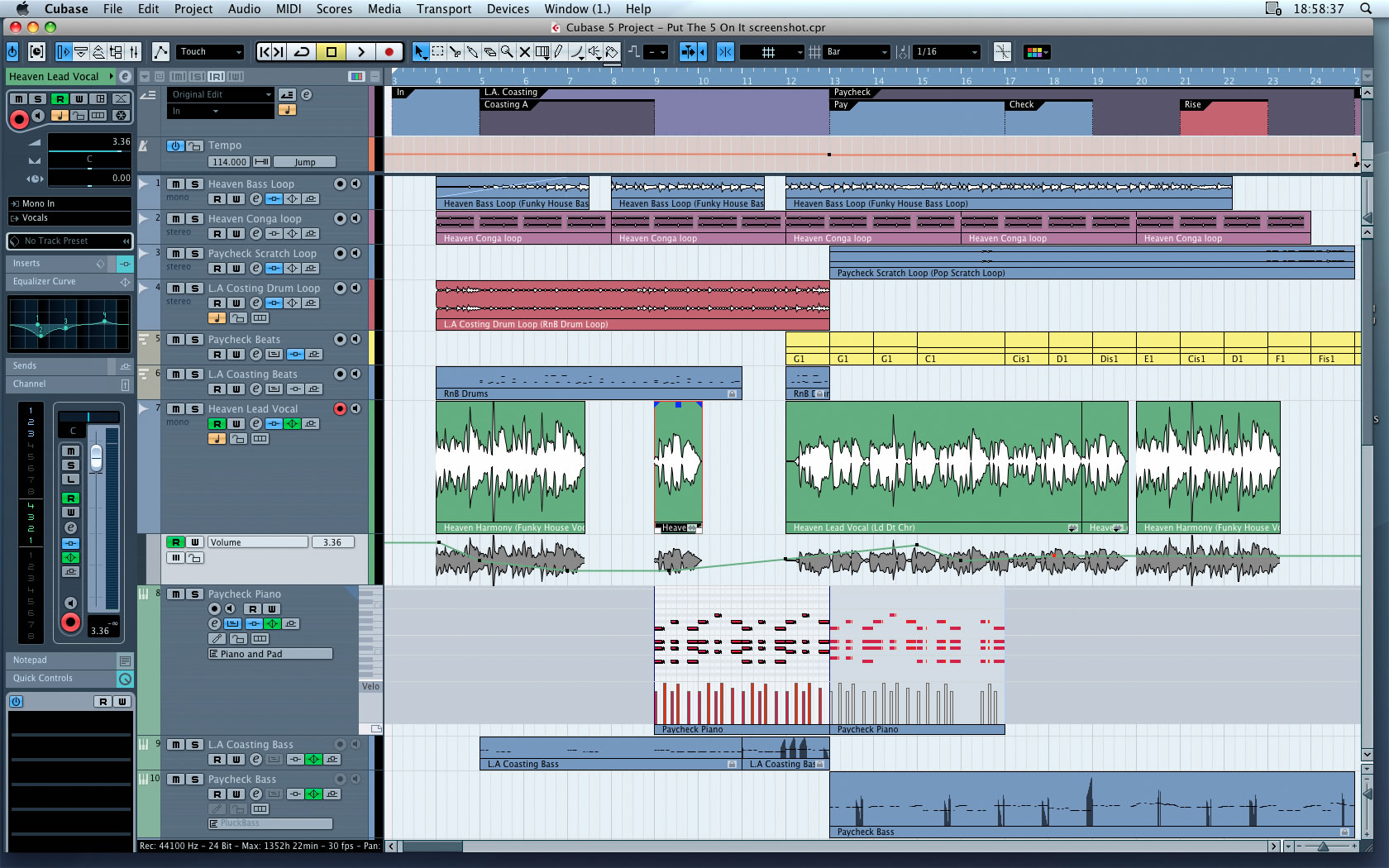
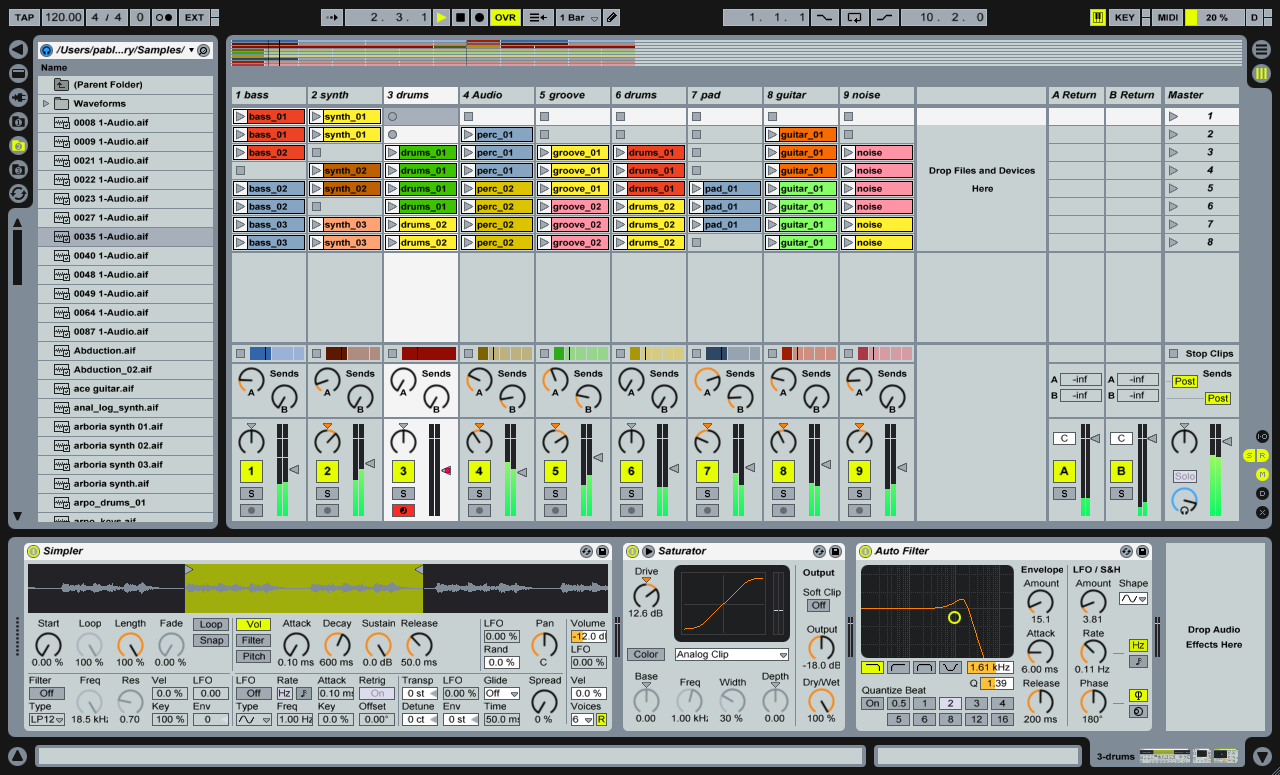
http://rekkerd.org/img/201404/prop_reason71.jpg http://www.highprofileaudio.com/LogicPro_BIG1.jpg http://static.kvraudio.com/i/b/cubase5.jpg http://soundista.com/wp-content/uploads/2012/06/Ableton.png
When it comes to music and graphics, there is not even a contest. Custom GUI win hearts of the users. Same story with mobile apps and web apps.
As matter of fact even some of the apps that do use Native GUIs they reject the native look using their own custom look at least to an extend.
And the native look goes more and more towards popular custom guis we see in web apps, like flat design etc etc.
Edit: not only for the look but also for the feel. I hate when my usual keyboard shortcuts do something different in Pharo than in my OS.
There has been a project to bring native interfaces to pharo called Mars
https://marsonpharo.wordpress.com/
but after the student left none took the project further. So yes its possible but for now there zero interest for it in pharo community.
The commercial Smalltalks do this but they are very pricey.
Yes! This is why comparing Smalltalk to programming languages misses the whole point. I just wrote a blog post about this: "Programmers: You Probably Don’t Know What a Computer Is" http://seandenigris.com/blog/?p=1092
Qt is probably the best example of this, so much that people will actually cite it as an example of a native UI toolkit when in fact it isn't, it just skins its widgets to look like it.
Mainstream will kill Pharo in an instant. Pharo is too cool and too well designed for mainstream. Pharo also is going towards a complete opposite direction of sacrificing features over ease of usage.
So in the end Pharo is not designed for the mainstream developer its designed for the developer that looks for something radical diffirent.
But diffirence comes with a cost, it means that you get out your comfort zone, explaining basic concepts takes much more time and effort because of lack of familiarity etc etc.
So if you dont understand Pharo at first try, thats not a bug thats a feature. If you do understand Pharo at second try that's a bug.
Some people refer to pharo as "the red pill" of coding, taking the red pill has its advantages but also significant disadvantages. The choice in the end is yours.
Sure documentation and website can be improved but it wont solve the problem that Pharo is outside mainstream way of doing coding because this is what makes Pharo so fun to work with :)
And people wonder why the Smalltalk community has such a bad reputation.
If yes then I hope Pharo keeps bringing a lot more of this "bad reputation" I find it very useful and productive. Frankly I wish I was aware of this "bad reputation" 25 years ago, would have saved me a lot of trouble learning all these languages which just recycle the same old things slightly modified. Unfortunately I converted to Squeak and then Pharo , a couple years ago. But better late than never :)
By the way you do not need to be a "snob" Smalltalker to be upset about mainstream's software disregard of good designs. There are endless posts on C++ design, Java design, Javascript design , Eclipse design , Visual Studio design, the horror of MFC, the horrors of web development, the horrors of android development and so much more.
The Pharo community needs to knock it off, with that kind of arguments. (And I say that, being a part of that community).
Pharo is NOT too cool and too well designed for the mainstream. :( It /is/ cool, and has a lot of good work put into it. But it still needs a lot more work (especially in documentation and tutorials) before it's really useable by people without extensive Smalltalk experience. So, everybody shut up and roll up your sleeves and work. And be humble.
Like calling it "the" red pill is overselling it I mean.
It's "a" red pill.
You could argue that some language like Lisp requires the same, but the problem is that Lisp is just a language, Pharo is a lot more than that.
So for me, Pharo is the only "red pill" I can think of. Not because its diffirent but because is so fundamentally diffirent. Everything else is just blue pills with some red spots here and there. Thus I cant call Pharo , "a" red pill.
But if you have something else that is as diffirent as Pharo is I am mostly welcome the info , love to try fresh approaches to coding :)
Another thing to note here is that I dont use the term "red pill" to identify it as something superior. Its not superior , far from it , it come with its own problems and weaknesses. Pharo is neither a paradise or a utopia.
Pharo is not for everyone but for specific people looking for a very diffirent way of coding. But even they may not like Pharo.
In the end Pharo is another way of doing coding, it wont make you sexy with the ladies or turn you into a super coder.
You're probably referring to the fact that there's an option to deploy the hello world PLUS the VM it runs on, in a single package. That's like saying "You can't give a Java hello world to someone under 50 MB". Yes, technically true, the couple of lines of Hello World source code don't work without a 50 MB JRE. But you're being disingenuous.
None of that is in Pharo. It uses a clunky font, clunky windows, clunky shadows on windows, clunky resizing of the main window, its own open/save dialogs, its own finder, ...
Looks dated to me...
Actually Lisp is so much more.
Lisp is a whole family of programming languages and its implementations. From Lisps on tiny micro-controllers, PCs, servers, to supercomputers. From simple interpreters to highly optimizing whole-program compilers.
Pharo is just one particular implementation of the programming language Smalltalk.
I don't believe for example its good design to depend on C libraries so heavily especially for something as essential like GUI development . I know for at least one bug in GTK that took a year to get resolved on MacOS because most people were not interested in it. In Pharo bug fixing is a lot easier because the language is dynamic and live and it has plenty of powerful IDE tools to make your life easier find bugs and resolved them. Same process in C or C++ is a pain in the ass. Python community chose to heavily depend on third party C/C++ GUI APIs .
I completely agree about documentation and tutorials but that does not make Pharo any less cooler in my back or worse designed , its makes it partly undocumented. Which is one of downsides of using Pharo.
And this is not just about Pharo, take Common Lisp and compare it with Javascript, how one language has been designed and how another. Which one is most popular ? How many articles have been written about Javascript ugliness ? What about C++ and Java way of doing OOP ? Compare it with the way Smalltalk is doing OOP.
Good design have been proven again and again in the software world highly unpopular , because people prefer to buy features. You can be humble and you can be honest, but you cant be both. I chose to be honest.
I... I literally have no words.
No, my definition of bad reputation is perfectly demonstrated by your tone and attitude throughout this thread. You don't even seem to be aware of it, which is mystifying.
Try to step back for a second, reread what you wrote and start wondering if you'd be even remotely interested in joining a community filled with people with a similar elitist and condescending attitude such as yours.
You like Smalltalk, I get it. Good for you. Now try to learn to promote what you like without making it sound like everyone who doesn't share your passion is an idiot.
Many of the good designs of Smalltalk have been integrated to modern coding as well. There are complex practical reasons why good design and ease of use has not been the focus for the majority of programming languages for very long time.
To classify myself as elitist you will have to find at least one time of me mentioning Pharo as best solution out there. Quite the contrary I already said that it comes with its own share of problems and issues.
I am not here to promote it, I am here to help people understand what it is and let them make their own mind if they are interested in giving it a try or not.
Fonts that comes with Pharo by default is a bitmap font, you can replace it with any TrueType font in Pharo settings.
You can have setting windows, open/save dialogs, color windows and much more with Pharo's GUI. There is even a window manager that can help you manage multiple windows. Tab support , and much more.
If you hate Pharo GUI so much , dont use Pharo, nobody forces you to. None in the Pharo community has a problem improving the GUI (the GUI is actually improved in every release of Pharo) or even supporting native GUIs ( https://marsonpharo.wordpress.com/ ) but the community is very small and I think they are doing a great job for their size.
Personally I really like the GUI :)
That's not the point. It is just not used by the software itself.
> Personally I really like the GUI :)
I like the GUI of my Lisp Machine. But very very few people use it and it is behind the times in many ways.
> If you hate Pharo GUI so much
Pointing out that it is dated and clunky is not 'hating' it. If somebody asks me how a UI for development tool should look like, I would point out the importance of a native look and feel. Lighttable for example. A recent development. It's not really native. It uses complex web stuff on the desktop. Fail.
True, cross-platform development is tough. But it's somewhat possible. Example: https://www.jetbrains.com/idea/